


4 years ago
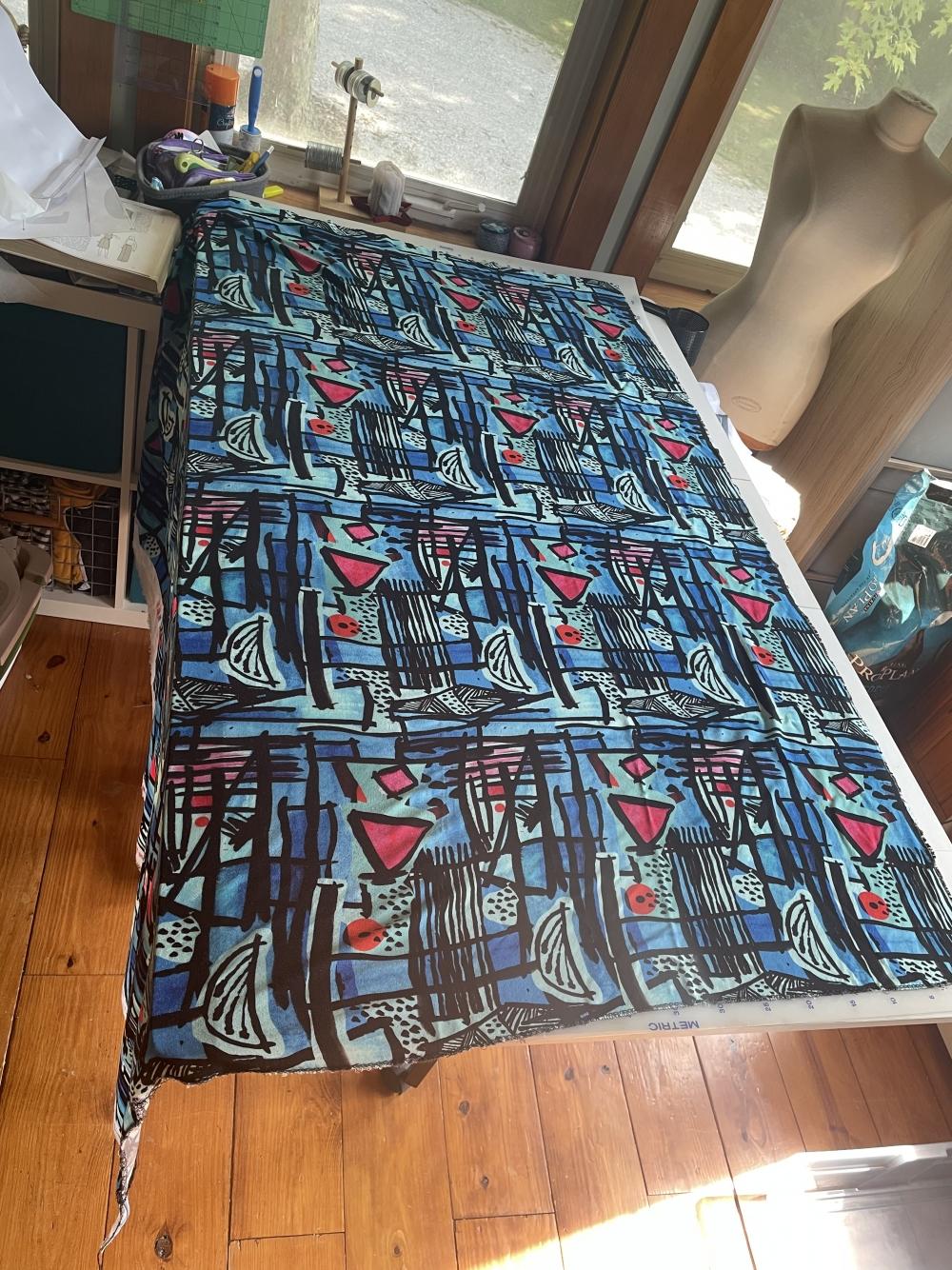
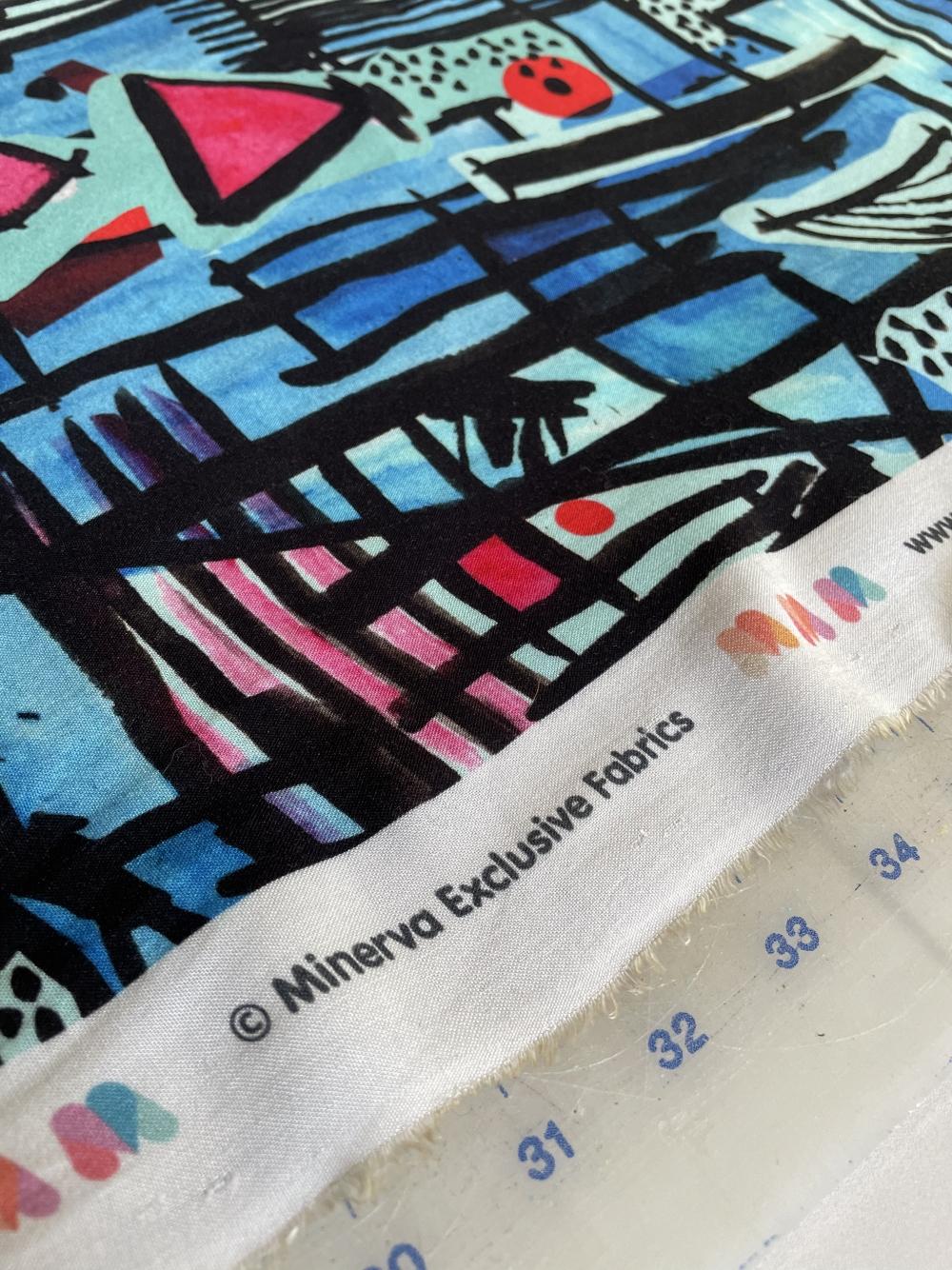
Hello! I’m very excited to get to share with you about an exclusive rayon challis print from Minerva. I was gifted this fabric to work with in exchange for this post. Minerva is starting their own Minerva exclusive fabric prints and this is one of them.
If you’ve never worked with a rayon challis fabric, I highly recommend it!!! It’s as soft as pajamas, flowy, and dreamy to wear. I love wearing blue and red tones together so I was quite drawn with this print. I’ve also learned that I love prints that look like sketches (or pencil drawings). I really enjoyed the large brush strokes and outlines as well.
For the pattern, I selected the Montavilla dress by Sew House 7. I’ve sewn the shorter dress version of this pattern and the top, but I have not yet sewn the maxi length (V3). This is a pattern that you can get a lot of mileage out of (with all of the variations included). I had in mind to make a long dress for this fabric, to not interrupt the print with too many seams.
I’ve had a theme this past year for myself to explore my tried-and-true patterns. I usually love the exploration of making a “new to me” pattern to try lots of different construction techniques. That said, making a pattern that you’ve made before, over and over again has lots of benefits as well.
Pattern version and mods:
Maxi Dress Version #3
Front and Back panels size 6, Side panels size 6 graded to a size 8
Added 2 belt loops (from the Burnside Bibs pattern)
Treat the fabric with starch (but first I washed and dried the fabric in the washer/dryer, twice). If you’re not familiar with this option, check out this post of mine for more details (it makes the cutting and sewing of drapey fabrics much easier). The following posts reference a spray stabilizer but I have since switched to diluting a liquid starch as a stabilizer:
https://www.minerva.com/posts/1022189
https://www.minerva.com/posts/1022190
Size:
My dimensions: Full Bust - 36”, Waist - 30”, Hips - 39.5”
Grading across sizes could be approached in a variety of ways with this dress. I graded from a 6 to an 8 in the side panels (but changed the ⅝” seam allowance in some areas). If you’re larger on the bottom then the top, you could go with just cutting out the larger size (and bring in the elastic in the underarm channel more to adjust). Your fit will be different depending on which fabric you use. A rayon challis will be looser vs a linen which would be more structured in the fit.
I decided to go with a larger seam allowance for the panels then the pattern recommended. I tried on the dress with the ⅝” seam allowance sewn (and the edges finished at a ¼” seam allowance). I wanted more ease for the dress to be more flowy on me through the waist and the hips. I kept the ⅝” seam line for the top portion of the side panels and quickly graded out to the finished ¼” serged edge. I left the area right above the slits at ⅝” as well. This little bit of ease added up across the four side panel/body seams and gave me that little extra looseness that I was looking for.
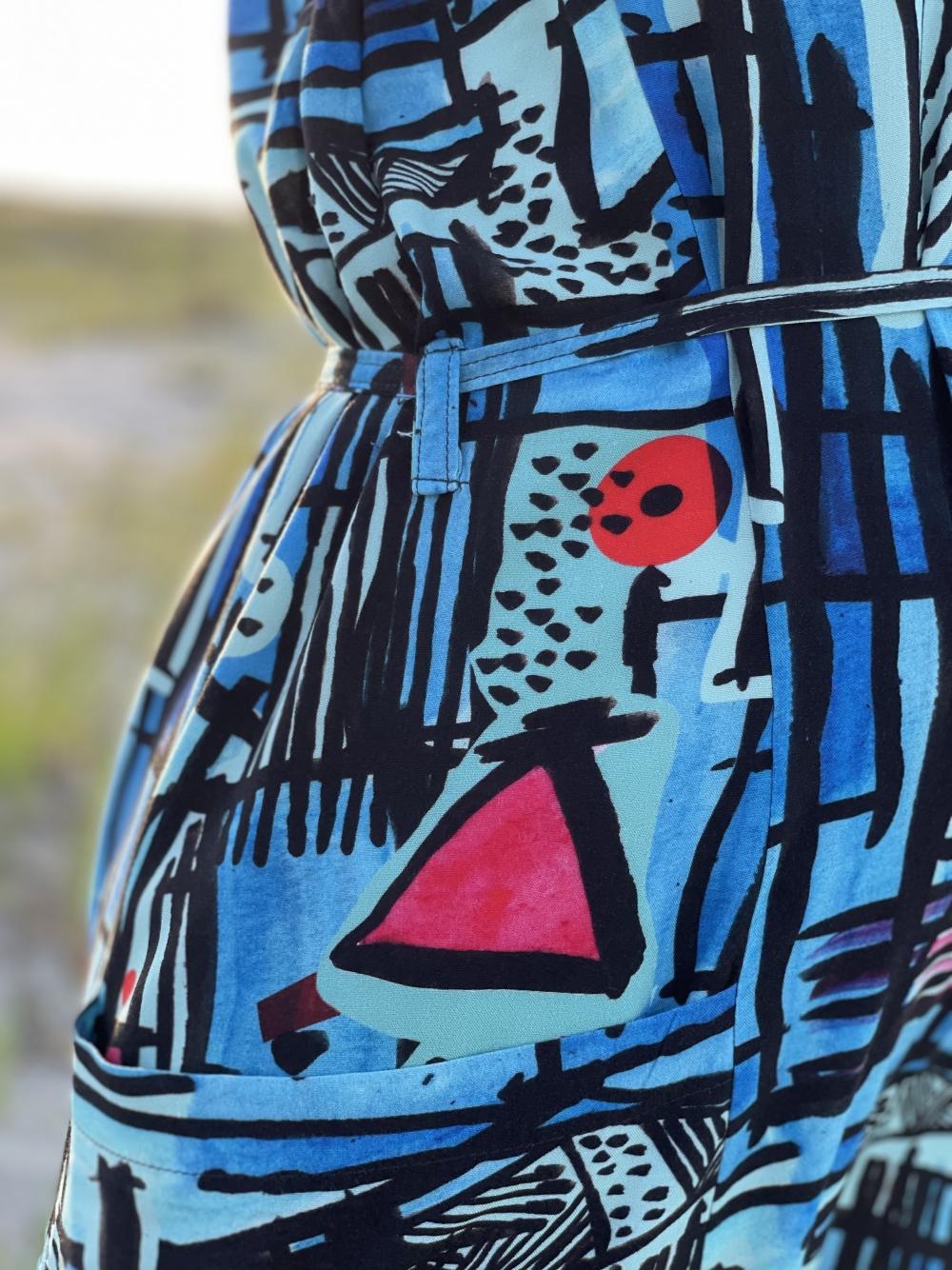
Belt loop mod: I love the belt detail included in this pattern! Making a belt in rayon challis fabric was fun to mimic the flow of the dress into the belt as well. You could absolutely wear the belt tied on top of the dress and it will stay in place. I decided, for fun, to add two belt loops in the center of each side panel to hold the belt on the dress. For the belt loop pattern, I used the belt loop pattern pieces from the Burnside Bibs. I tried on the dress and marked it with safety pins where I liked the belt to lay on my waist. I made sure the loop locations were in the same location, vertically, and then sewed them in place.
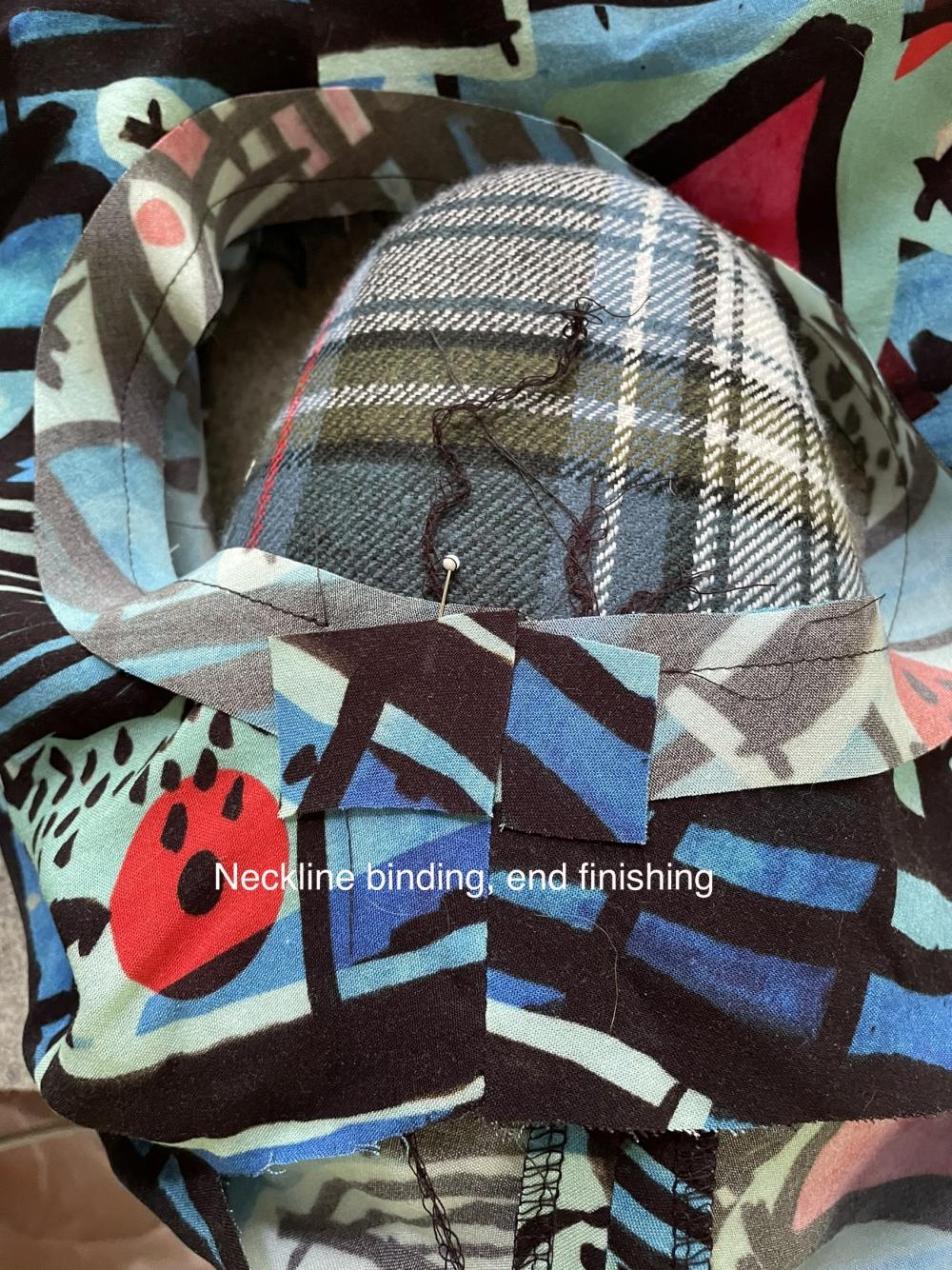
I wanted to share a photo of the neckline binding construction. The pattern recommends cutting the Neck Facing pattern piece on the bias (to finish the neckline on the inside of the dress). The instructions recommend to start and end sewing the binding, leaving a gap at the beginning seam. I shared a photo of what I like to do for this step.
I leave this gap, as recommended, but I will iron the beginning and end of the bias tape flat. This helps me align the bias tape seam to the seam in the shoulder.
After I iron the binding ends flat, I sew these edges together and then sew around to finish the neckline binding. This ensures the binding ends are flat and press well to finish.
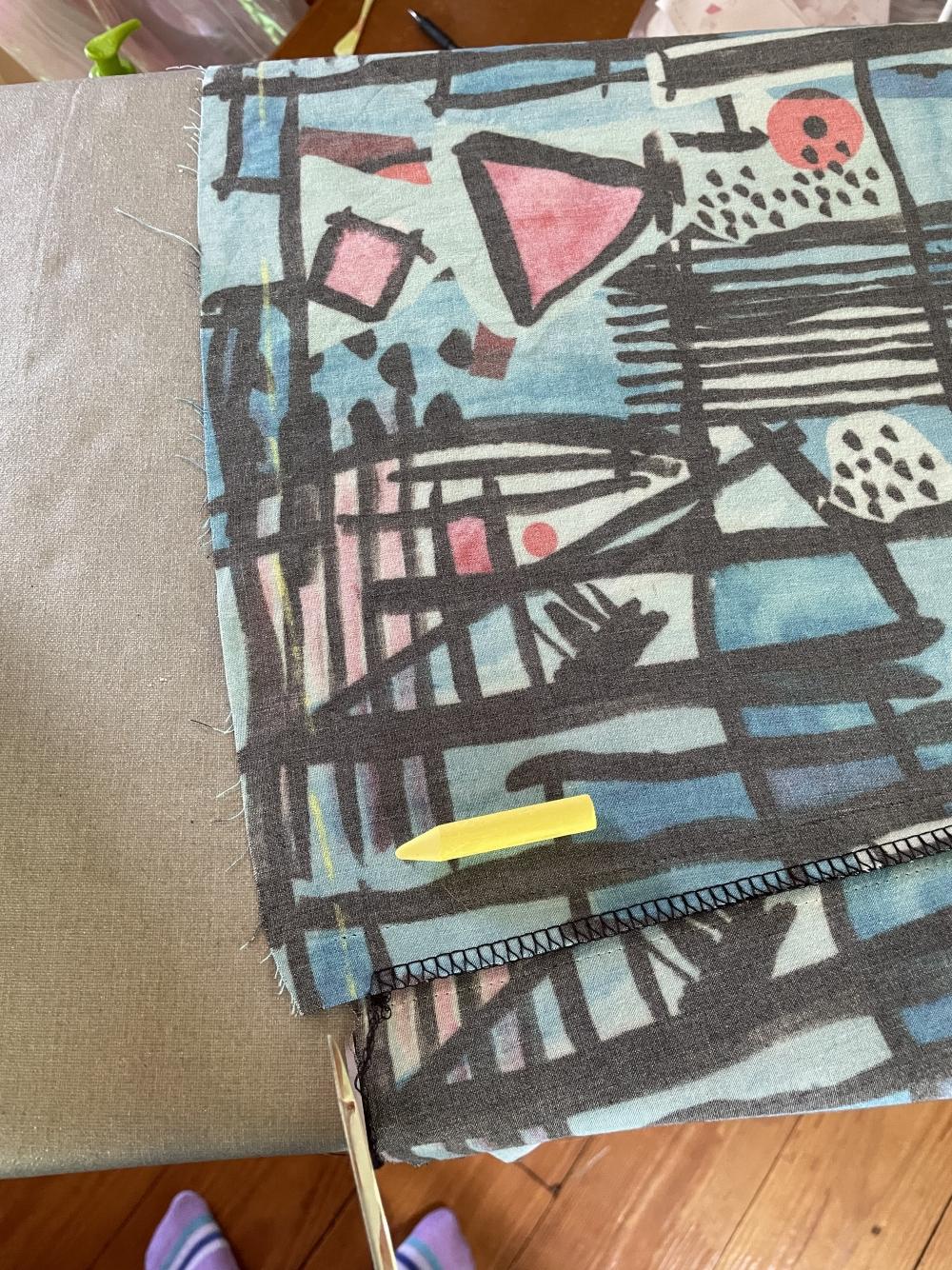
I wanted to share about how I approached sewing the panels in place (considering the rayon challis). There are multiple notches in the pattern pieces in the front, back, and side panels that are used in the assembly to align the pieces together (before sewing the seams). I made a different choice for assembly in this step. With rayon challis being drapey, I found a slight length difference in my fabric pieces as I aligned the panels together. I decided to skip the alignment notches to select the underarm as my alignment reference. I chose to hide the length difference in the bottom hem of the dress. I was careful and slow as I pinned the panels together. I took a photo to show where the length difference showed up in the bottom. I measured this difference and marked the bottom edge of the fabric with yellow chalk. I then trimmed off this extra length to take away the length difference. I wanted to note that this change was not an issue with the pattern but was a variation that I got with my own fabric application in using a drapey fabric. Normally it would always be best to follow the notches when aligning panels (I just did a variation in this case to hide the variation that I got with my wonderfully, flowy fabric).
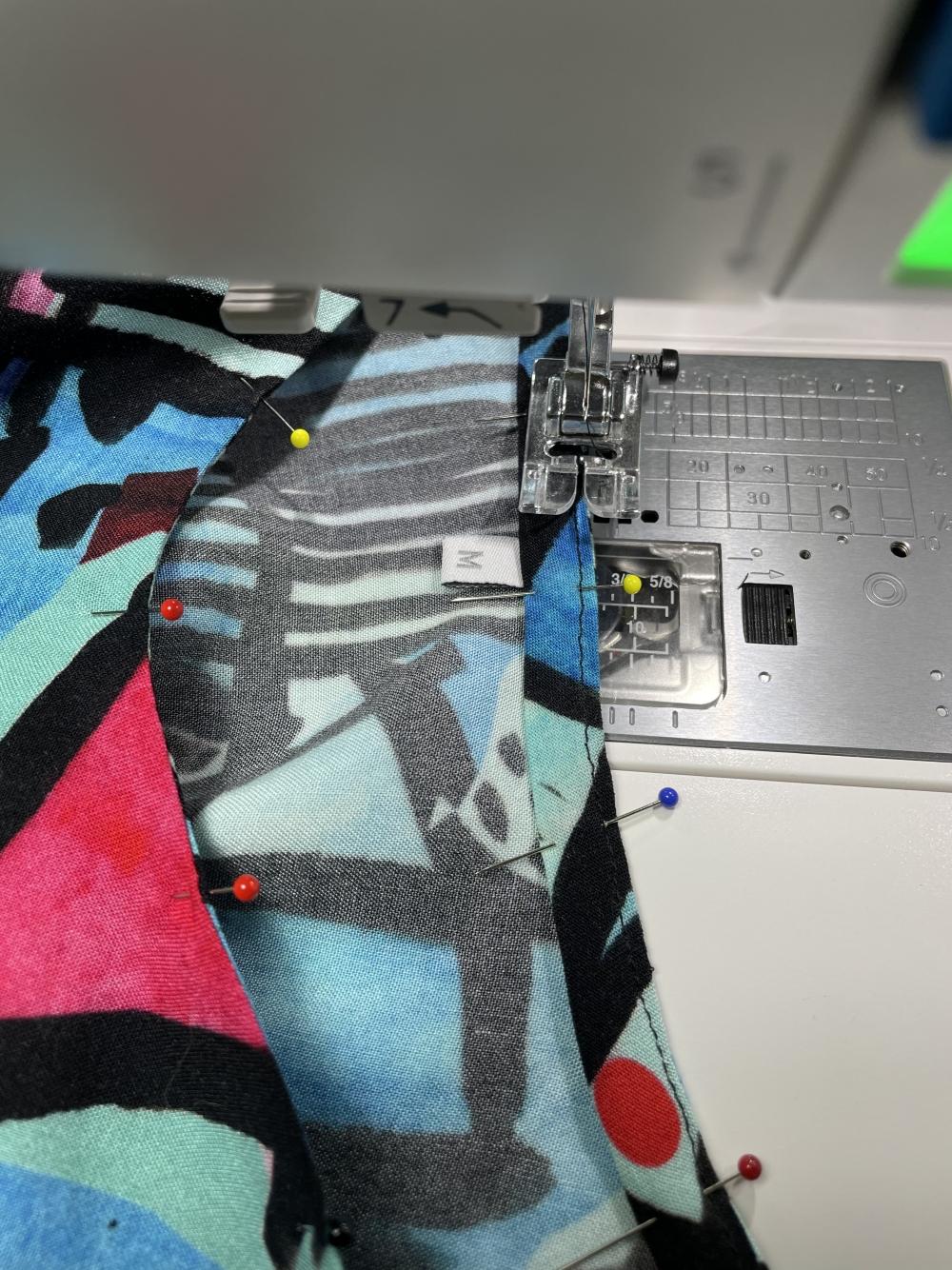
I sometimes forget to add a size label in my handmade garments, but I added one in this dress. The bottom hem also has mitered corners along the front slits (such a nice on the inside of the dress).
The pattern uses an ingenious construction technique for fit. Instead of bust darts, there are vertical darts that run above the bust through the back, parallel to the sleeves. They work well and are quite fun to try (if you’ve not tried this type of dart construction before).
If you’ve never worked with a rayon challis fabric, I highly recommend it!!! It’s as soft as pajamas, flowy, and dreamy to wear. I love wearing blue and red tones together so I was quite drawn with this print. I’ve also learned that I love prints that look like sketches (or pencil drawings). I really enjoyed the large brush strokes and outlines as well.
For the pattern, I selected the Montavilla dress by Sew House 7. I’ve sewn the shorter dress version of this pattern and the top, but I have not yet sewn the maxi length (V3). This is a pattern that you can get a lot of mileage out of (with all of the variations included). I had in mind to make a long dress for this fabric, to not interrupt the print with too many seams.
I’ve had a theme this past year for myself to explore my tried-and-true patterns. I usually love the exploration of making a “new to me” pattern to try lots of different construction techniques. That said, making a pattern that you’ve made before, over and over again has lots of benefits as well.
Pattern version and mods:
Maxi Dress Version #3
Front and Back panels size 6, Side panels size 6 graded to a size 8
Added 2 belt loops (from the Burnside Bibs pattern)
Treat the fabric with starch (but first I washed and dried the fabric in the washer/dryer, twice). If you’re not familiar with this option, check out this post of mine for more details (it makes the cutting and sewing of drapey fabrics much easier). The following posts reference a spray stabilizer but I have since switched to diluting a liquid starch as a stabilizer:
https://www.minerva.com/posts/1022189
https://www.minerva.com/posts/1022190
Size:
My dimensions: Full Bust - 36”, Waist - 30”, Hips - 39.5”
Grading across sizes could be approached in a variety of ways with this dress. I graded from a 6 to an 8 in the side panels (but changed the ⅝” seam allowance in some areas). If you’re larger on the bottom then the top, you could go with just cutting out the larger size (and bring in the elastic in the underarm channel more to adjust). Your fit will be different depending on which fabric you use. A rayon challis will be looser vs a linen which would be more structured in the fit.
I decided to go with a larger seam allowance for the panels then the pattern recommended. I tried on the dress with the ⅝” seam allowance sewn (and the edges finished at a ¼” seam allowance). I wanted more ease for the dress to be more flowy on me through the waist and the hips. I kept the ⅝” seam line for the top portion of the side panels and quickly graded out to the finished ¼” serged edge. I left the area right above the slits at ⅝” as well. This little bit of ease added up across the four side panel/body seams and gave me that little extra looseness that I was looking for.
Belt loop mod: I love the belt detail included in this pattern! Making a belt in rayon challis fabric was fun to mimic the flow of the dress into the belt as well. You could absolutely wear the belt tied on top of the dress and it will stay in place. I decided, for fun, to add two belt loops in the center of each side panel to hold the belt on the dress. For the belt loop pattern, I used the belt loop pattern pieces from the Burnside Bibs. I tried on the dress and marked it with safety pins where I liked the belt to lay on my waist. I made sure the loop locations were in the same location, vertically, and then sewed them in place.
I wanted to share a photo of the neckline binding construction. The pattern recommends cutting the Neck Facing pattern piece on the bias (to finish the neckline on the inside of the dress). The instructions recommend to start and end sewing the binding, leaving a gap at the beginning seam. I shared a photo of what I like to do for this step.
I leave this gap, as recommended, but I will iron the beginning and end of the bias tape flat. This helps me align the bias tape seam to the seam in the shoulder.
After I iron the binding ends flat, I sew these edges together and then sew around to finish the neckline binding. This ensures the binding ends are flat and press well to finish.
I wanted to share about how I approached sewing the panels in place (considering the rayon challis). There are multiple notches in the pattern pieces in the front, back, and side panels that are used in the assembly to align the pieces together (before sewing the seams). I made a different choice for assembly in this step. With rayon challis being drapey, I found a slight length difference in my fabric pieces as I aligned the panels together. I decided to skip the alignment notches to select the underarm as my alignment reference. I chose to hide the length difference in the bottom hem of the dress. I was careful and slow as I pinned the panels together. I took a photo to show where the length difference showed up in the bottom. I measured this difference and marked the bottom edge of the fabric with yellow chalk. I then trimmed off this extra length to take away the length difference. I wanted to note that this change was not an issue with the pattern but was a variation that I got with my own fabric application in using a drapey fabric. Normally it would always be best to follow the notches when aligning panels (I just did a variation in this case to hide the variation that I got with my wonderfully, flowy fabric).
I sometimes forget to add a size label in my handmade garments, but I added one in this dress. The bottom hem also has mitered corners along the front slits (such a nice on the inside of the dress).
The pattern uses an ingenious construction technique for fit. Instead of bust darts, there are vertical darts that run above the bust through the back, parallel to the sleeves. They work well and are quite fun to try (if you’ve not tried this type of dart construction before).
Add all tagged items to your basket