



Embroidery Stitch Guide (Part 2)
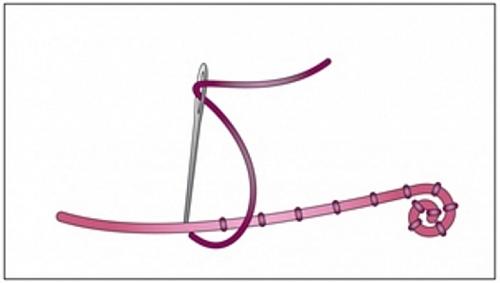
Couching
Uses: Outlining shapes, straight and curvy lines, spirals, bold dimensional accents, decorative borders.
This stitch involves two threads: a thicker foundation thread, (also called the laid thread) and a thinner thread (called the couching thread).
Bring foundation thread onto the front and place along the design line.
Bring the couching thread up under the foundation thread and make a tiny stitch over the thread, going back into or very close to the entry hole.
Continue making evenly spaced stitches over the foundation thread to anchor the foundation thread in place.
To finish couching, bring the foundation thread onto the back and secure it.
Secure couching thread on back.
Tips:
Use a matching coloured thread for the couching stitches to blend in or a contrasting colour for a bolder look.
Use DMC cotton Thread (1 strand) to couch down solid colour foundation threads and use one strand of DMC Light Effects Thread to couch down thicker metallic foundation threads.
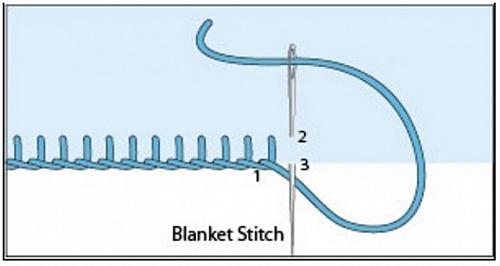
Blanket Stitch
Uses: Straight and gently curved lines, borders and finishing edges.
Work from left to right.
Bring needle up at 1, down at 2 and up at 3, keeping the thread looped under the needle.
Pull thread through and shape stitch as desired.
Repeat multiple stitches until complete.
Tips:
For an even line of stitching keep the height of the stitches even throughout.
To vary the look of the stitch, change the height of each stitch making one long and one short.
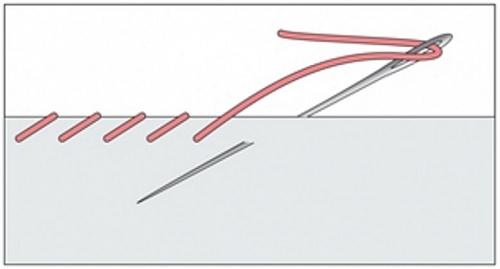
Whip Stitch (Overcast stitch)
Uses: is used for seaming fabrics, either right or wrong sides together. The stitches should be about 1/16" apart, and only as deep as necessary to create a firm seam.
Bring needle up at 1 and down at 2 making sure to pierce both pieces of fabric to bind together.
Bring needle back up at 3 and down 4, continue stitching the seam.
Tip:
Leave a tail of thread when you start, and work several stitches over it to secure and hide the thread.
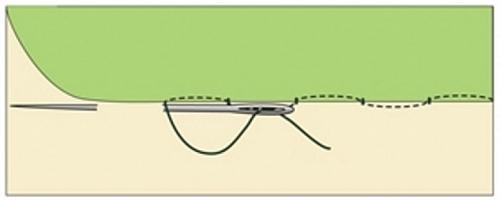
Ladder Stitch
Uses – Appliqué, bind two seams together.
Bring needle up at 1 and through the fabric a short distance to 2, keeping the thread hidden under the fabric (dashed lines).
Bring needle over to 3 and repeat.
Only the vertical stitches should show on the front of the fabric. Stitches indicated by dashed lines will be hidden in the base fabric, or in the folds of the appliqué.
Continue stitching.
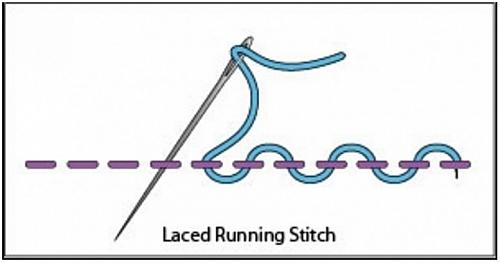
Laced Running Stitch
Uses: Borders, decorative outlining.
Stitch a line of Running Stitches.
Bring the lacing thread up at 1 and lace it under the next running stitch.
Continue lacing the thread up and down through the running stitches keeping the loops even.
To finish the lacing, bring the lacing thread onto the back under the centre of the last stitch.
Tip:
Use a blunt tip Tapestry needle for the lacing thread. This will help prevent you from piercing the fabric or the Running Stitch threads.
Coral Stitch
Uses: Decorative borders, foliage, plant stems
Working from right to left, hold the working thread to the left of the starting point (or the last stitch). Insert the needle into the fabric above the working thread and bring the tip of the needle out just under the thread. Wrap the thread around the needle from left to right and pull the needle through the resulting loop.
Continued in our next post…
Couching
Uses: Outlining shapes, straight and curvy lines, spirals, bold dimensional accents, decorative borders.
This stitch involves two threads: a thicker foundation thread, (also called the laid thread) and a thinner thread (called the couching thread).
Bring foundation thread onto the front and place along the design line.
Bring the couching thread up under the foundation thread and make a tiny stitch over the thread, going back into or very close to the entry hole.
Continue making evenly spaced stitches over the foundation thread to anchor the foundation thread in place.
To finish couching, bring the foundation thread onto the back and secure it.
Secure couching thread on back.
Tips:
Use a matching coloured thread for the couching stitches to blend in or a contrasting colour for a bolder look.
Use DMC cotton Thread (1 strand) to couch down solid colour foundation threads and use one strand of DMC Light Effects Thread to couch down thicker metallic foundation threads.
Blanket Stitch
Uses: Straight and gently curved lines, borders and finishing edges.
Work from left to right.
Bring needle up at 1, down at 2 and up at 3, keeping the thread looped under the needle.
Pull thread through and shape stitch as desired.
Repeat multiple stitches until complete.
Tips:
For an even line of stitching keep the height of the stitches even throughout.
To vary the look of the stitch, change the height of each stitch making one long and one short.
Whip Stitch (Overcast stitch)
Uses: is used for seaming fabrics, either right or wrong sides together. The stitches should be about 1/16" apart, and only as deep as necessary to create a firm seam.
Bring needle up at 1 and down at 2 making sure to pierce both pieces of fabric to bind together.
Bring needle back up at 3 and down 4, continue stitching the seam.
Tip:
Leave a tail of thread when you start, and work several stitches over it to secure and hide the thread.
Ladder Stitch
Uses – Appliqué, bind two seams together.
Bring needle up at 1 and through the fabric a short distance to 2, keeping the thread hidden under the fabric (dashed lines).
Bring needle over to 3 and repeat.
Only the vertical stitches should show on the front of the fabric. Stitches indicated by dashed lines will be hidden in the base fabric, or in the folds of the appliqué.
Continue stitching.
Laced Running Stitch
Uses: Borders, decorative outlining.
Stitch a line of Running Stitches.
Bring the lacing thread up at 1 and lace it under the next running stitch.
Continue lacing the thread up and down through the running stitches keeping the loops even.
To finish the lacing, bring the lacing thread onto the back under the centre of the last stitch.
Tip:
Use a blunt tip Tapestry needle for the lacing thread. This will help prevent you from piercing the fabric or the Running Stitch threads.
Coral Stitch
Uses: Decorative borders, foliage, plant stems
Working from right to left, hold the working thread to the left of the starting point (or the last stitch). Insert the needle into the fabric above the working thread and bring the tip of the needle out just under the thread. Wrap the thread around the needle from left to right and pull the needle through the resulting loop.
Continued in our next post…