


3 years ago
I love thermal knit fabric (or waffle knits). When I saw this one available as a Minerva Ambassador fabric, I jumped on the chance to work with it. It’s cozy with the texture and the construction of the fabric.
I initially thought I would like to make a base layer with this fabric. Once I got the fabric in hand, I realized the percentage of stretch in the fabric was small. This waffle knit fabric is 100% cotton. It’s a really nice option for a natural fabrics that don’t contain synthetic or man-made material (which can also mean it will last longer). I haven’t worked a lot with knit fabrics that don’t contain Elastane or Spandex so I had to think a little bit on what to make. I love that waffle knits trap air and can be warmer than a more traditional knit fabric.
I decided to try the Fiber Mood Indy pattern with this fabric. I have admired Fiber Mood patterns for awhile now but have never made one. I was intrigued with how the Indy sweatshirt has a cozy element, but also looks a bit stylish as well. I was really intrigued with the construction. If you like sewing patterns that look like a puzzle, you’ll love making up this sweatshirt. I love learning new techniques and to be honest, that’s why I love trying new patterns. This is one of those patterns that you have to just follow the directions and trust the designer.
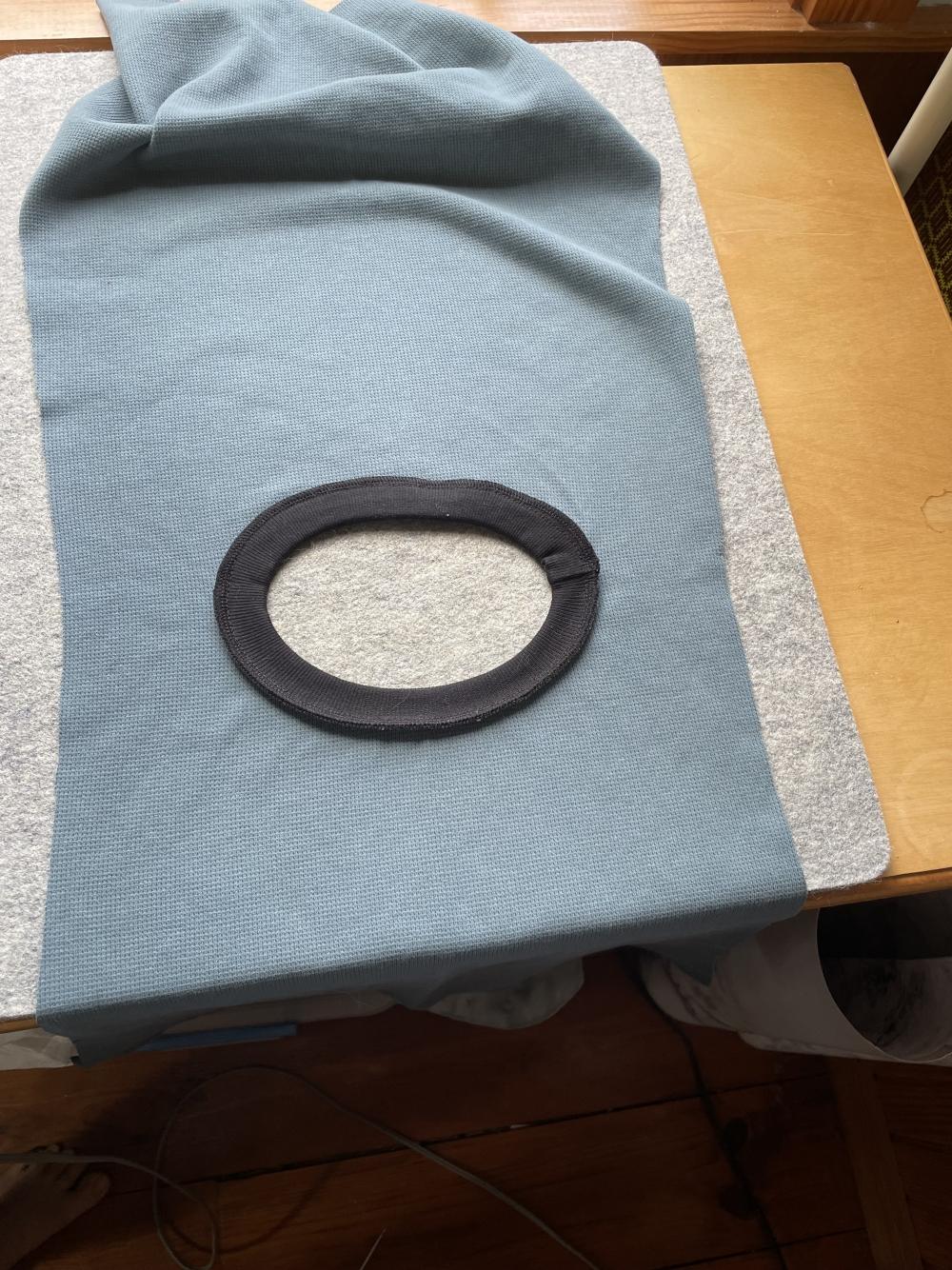
As you’ll notice with the contrast, I did select a different rib knit fabric for the neckband, sleeve cuffs and waistband. I selected a 1x1 rib fabric but most likely any rib knit fabric would work well in this design. You don’t need much fabric for the cuffs which was a nice surprise. I got 18” of a rib knit fabric (60” wide) and this was more than enough for my my sweatshirt. I made a size Small\Medium.
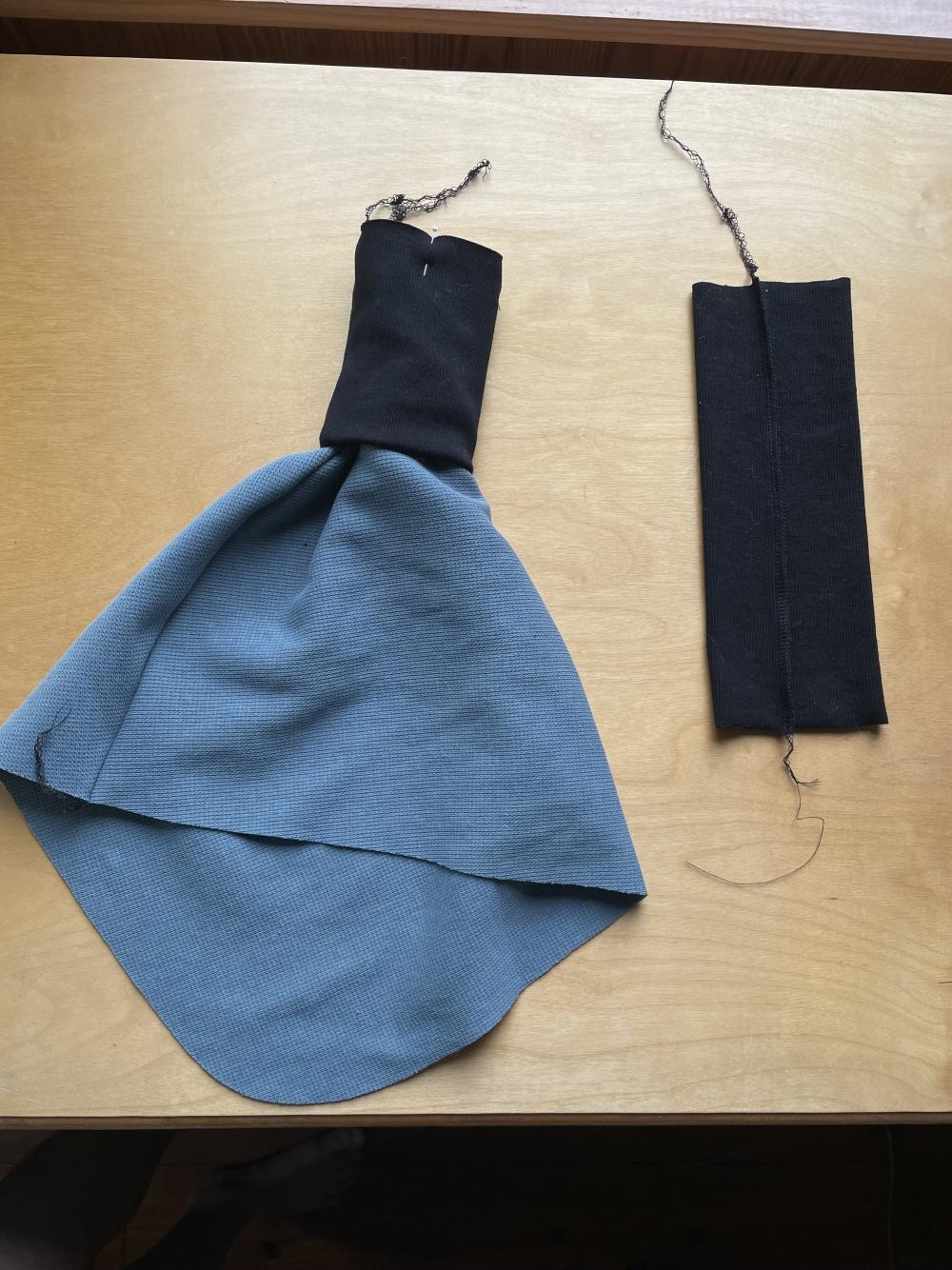
One tip that I’ll share that I have to keep reminding myself is to press knit fabric. There’s always a temptation to skip that step, but it makes such a difference. I think pressing Knits is even more satisfying then pressing woven fabrics. I was tempted to skip pressing the long sleeve cuffs. The cuffs have a long seam and will twist within the cuff if it’s not pressed first.
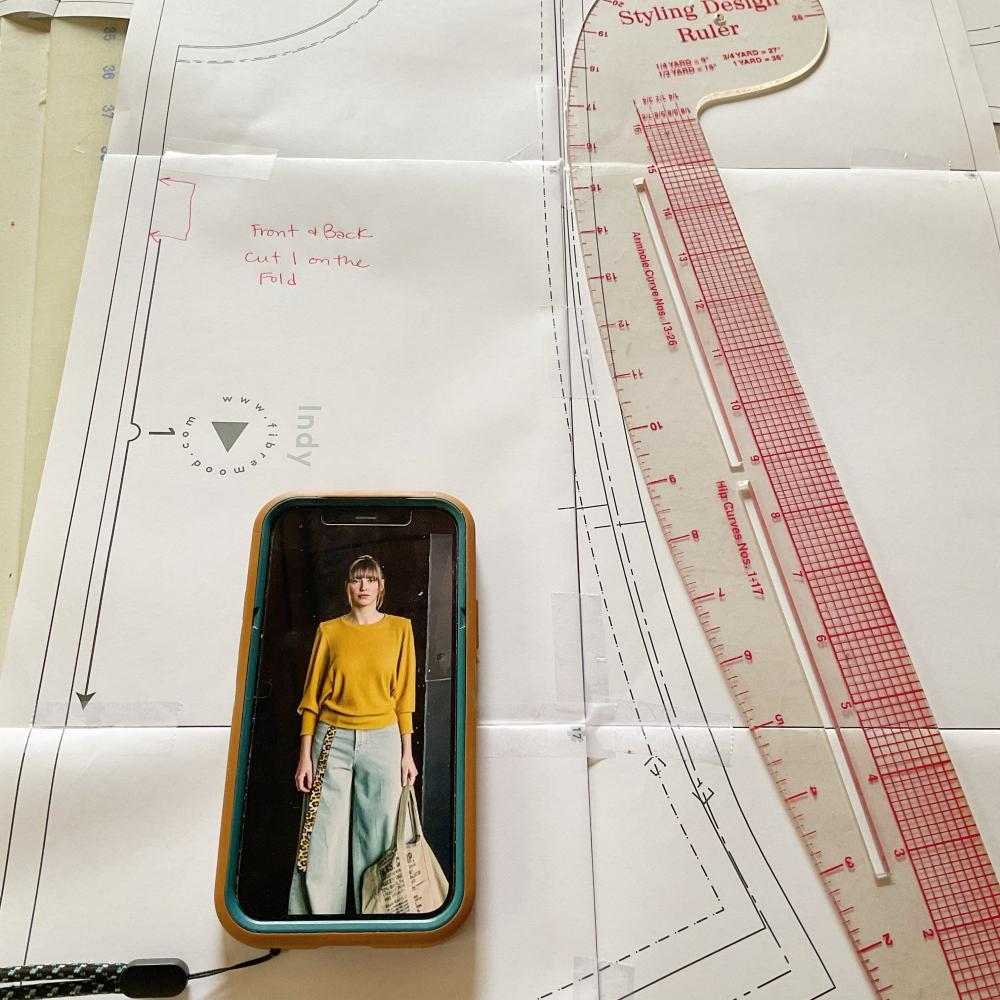
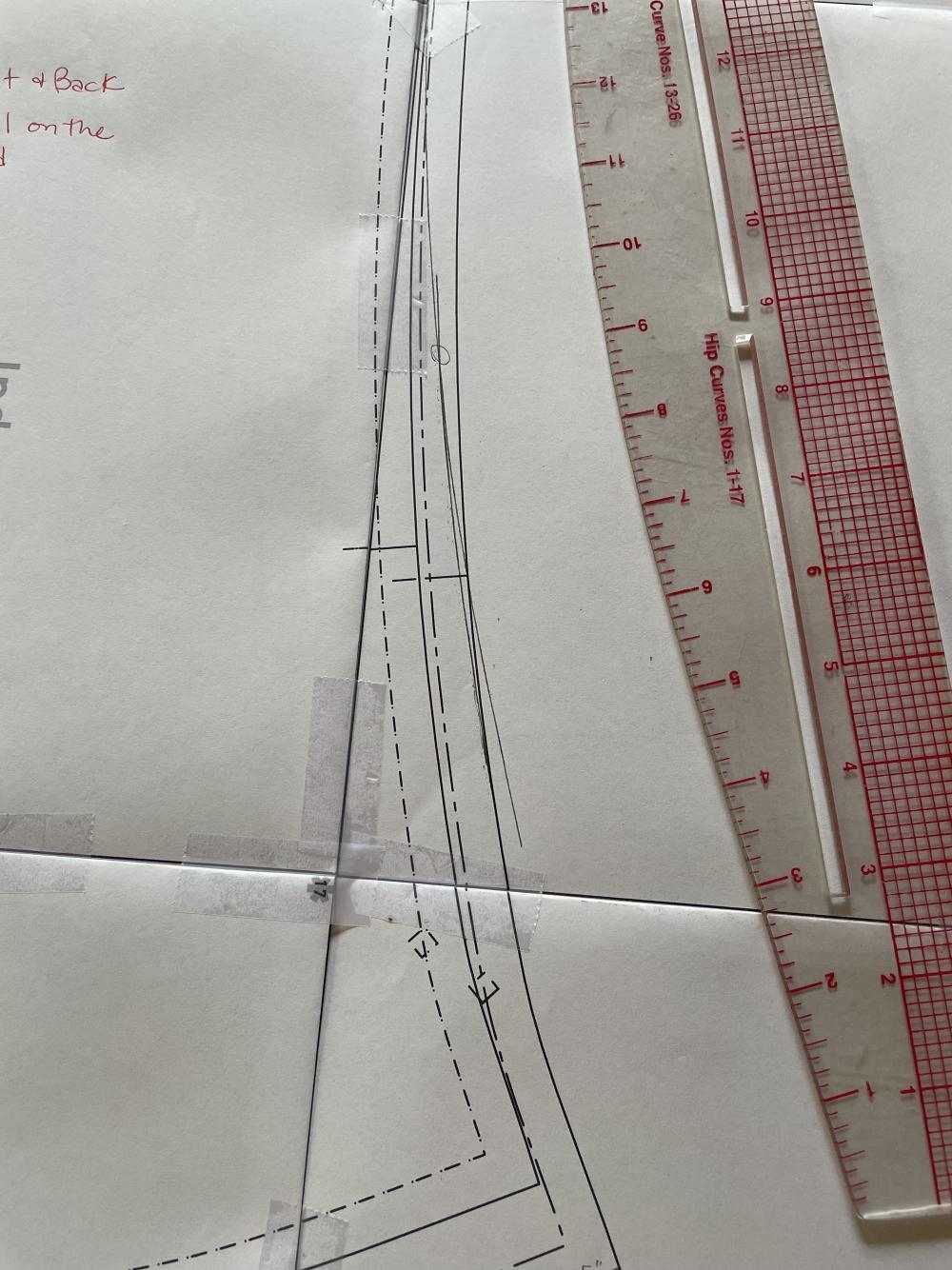
Although this is a roomy design, I decided to grade across two sizes for the hips. I don’t enjoy sweatshirts that are too tight on me. I love that the waist, neck, and sleeve cuffs are design elements that bring your eye in to narrower points in the design. I’m really glad I did this grading. With the sleeves being so large, I had a little point along the tiny side seams that I did this grading. I’ve included pictures if you’d like to check this out, for reference.
I purchased and downloaded a digital version of this pattern. I learned that the digital, individual versions of Fibre Mood patterns include the seam allowance. If you purchase a Fibre Mood pattern as a part of a magazine collection via a paper copy, the seam allowances are not included (and need to be added).
I noticed the pattern pieces weren’t labeled so I added that step (labeling the pattern diagram and each pattern piece individually). This step saved me time.
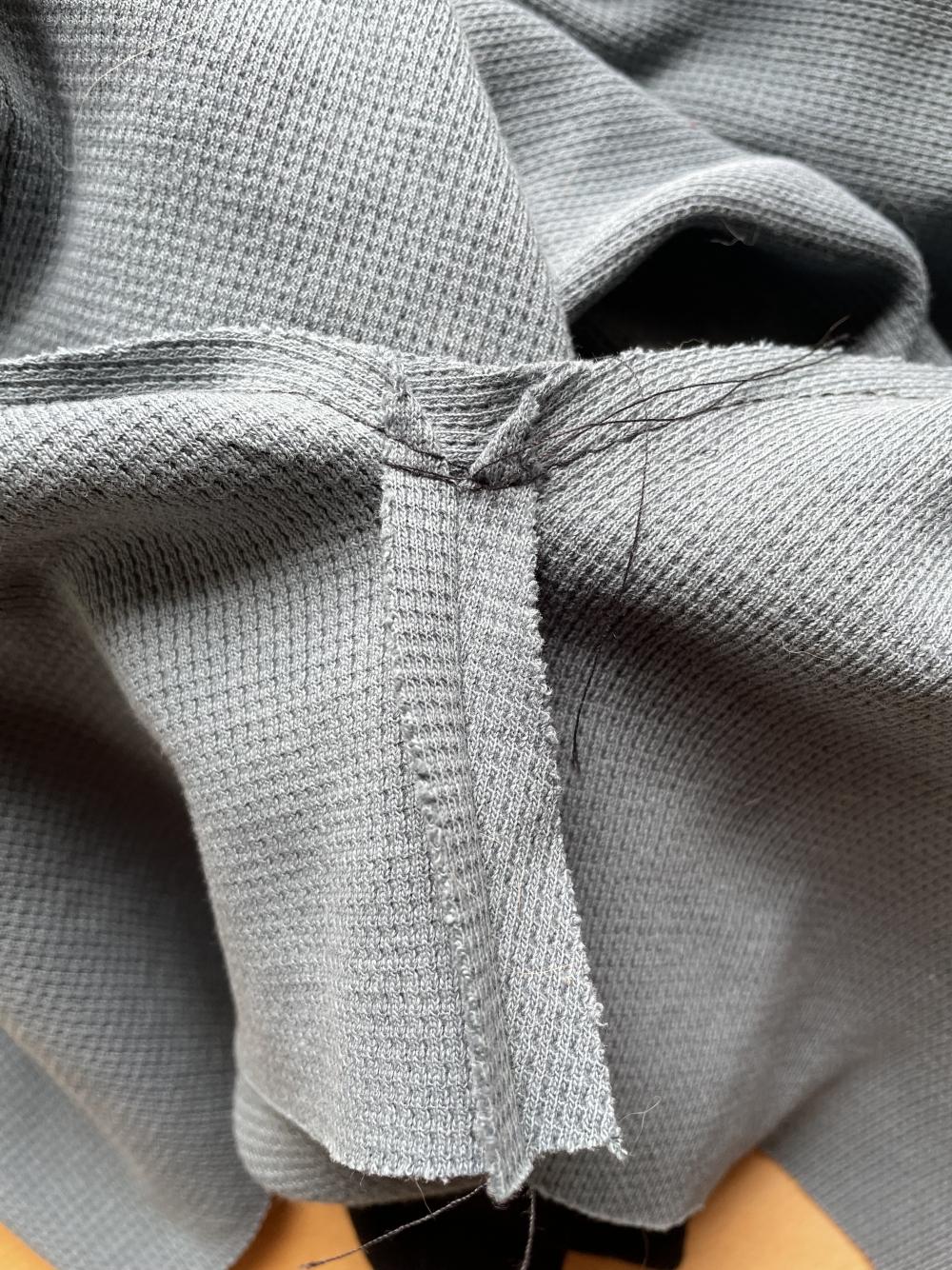
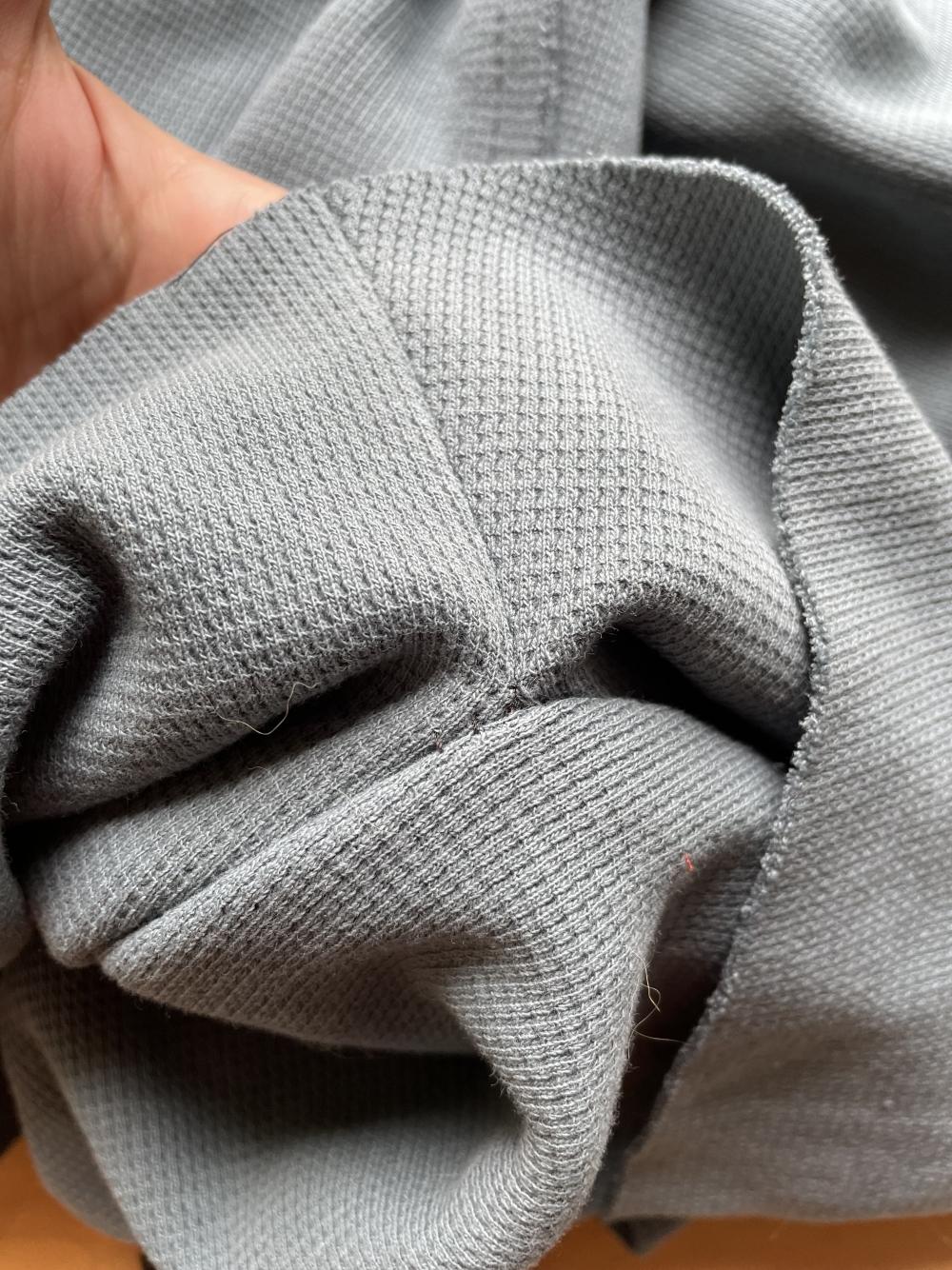
I added one little detail at the underarm construction to the side seams. I folded little corners at this detail for a smoother finish. You can see this for reference in the pictures as well. The pattern didn’t call this out, but I liked this finish better so that the side seam is folded flat when you apply the sleeve.
I initially thought I would like to make a base layer with this fabric. Once I got the fabric in hand, I realized the percentage of stretch in the fabric was small. This waffle knit fabric is 100% cotton. It’s a really nice option for a natural fabrics that don’t contain synthetic or man-made material (which can also mean it will last longer). I haven’t worked a lot with knit fabrics that don’t contain Elastane or Spandex so I had to think a little bit on what to make. I love that waffle knits trap air and can be warmer than a more traditional knit fabric.
I decided to try the Fiber Mood Indy pattern with this fabric. I have admired Fiber Mood patterns for awhile now but have never made one. I was intrigued with how the Indy sweatshirt has a cozy element, but also looks a bit stylish as well. I was really intrigued with the construction. If you like sewing patterns that look like a puzzle, you’ll love making up this sweatshirt. I love learning new techniques and to be honest, that’s why I love trying new patterns. This is one of those patterns that you have to just follow the directions and trust the designer.
As you’ll notice with the contrast, I did select a different rib knit fabric for the neckband, sleeve cuffs and waistband. I selected a 1x1 rib fabric but most likely any rib knit fabric would work well in this design. You don’t need much fabric for the cuffs which was a nice surprise. I got 18” of a rib knit fabric (60” wide) and this was more than enough for my my sweatshirt. I made a size Small\Medium.
One tip that I’ll share that I have to keep reminding myself is to press knit fabric. There’s always a temptation to skip that step, but it makes such a difference. I think pressing Knits is even more satisfying then pressing woven fabrics. I was tempted to skip pressing the long sleeve cuffs. The cuffs have a long seam and will twist within the cuff if it’s not pressed first.
Although this is a roomy design, I decided to grade across two sizes for the hips. I don’t enjoy sweatshirts that are too tight on me. I love that the waist, neck, and sleeve cuffs are design elements that bring your eye in to narrower points in the design. I’m really glad I did this grading. With the sleeves being so large, I had a little point along the tiny side seams that I did this grading. I’ve included pictures if you’d like to check this out, for reference.
I purchased and downloaded a digital version of this pattern. I learned that the digital, individual versions of Fibre Mood patterns include the seam allowance. If you purchase a Fibre Mood pattern as a part of a magazine collection via a paper copy, the seam allowances are not included (and need to be added).
I noticed the pattern pieces weren’t labeled so I added that step (labeling the pattern diagram and each pattern piece individually). This step saved me time.
I added one little detail at the underarm construction to the side seams. I folded little corners at this detail for a smoother finish. You can see this for reference in the pictures as well. The pattern didn’t call this out, but I liked this finish better so that the side seam is folded flat when you apply the sleeve.