


5 years ago
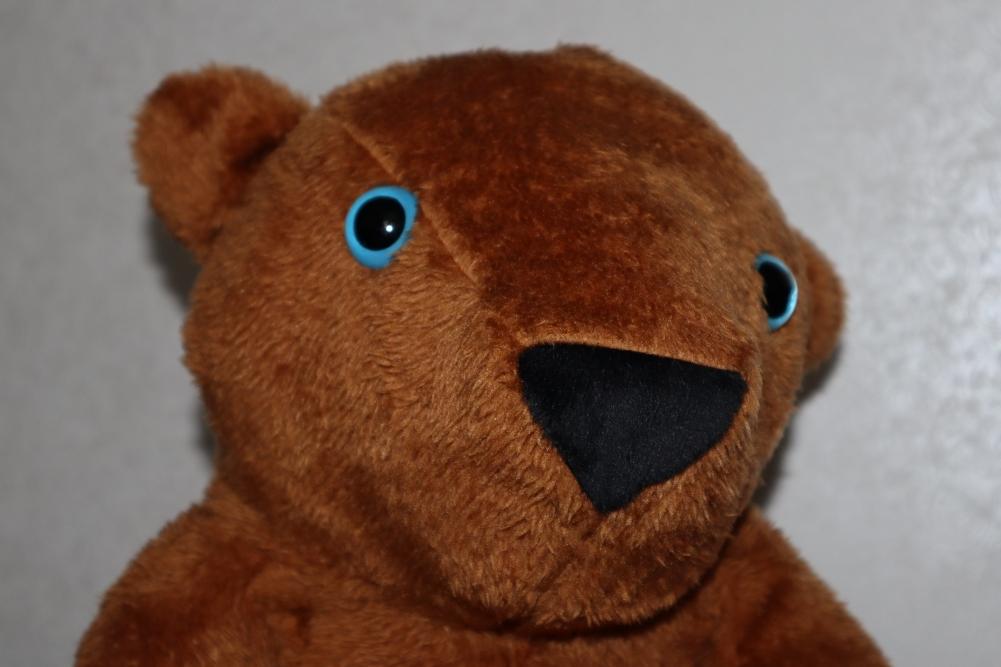
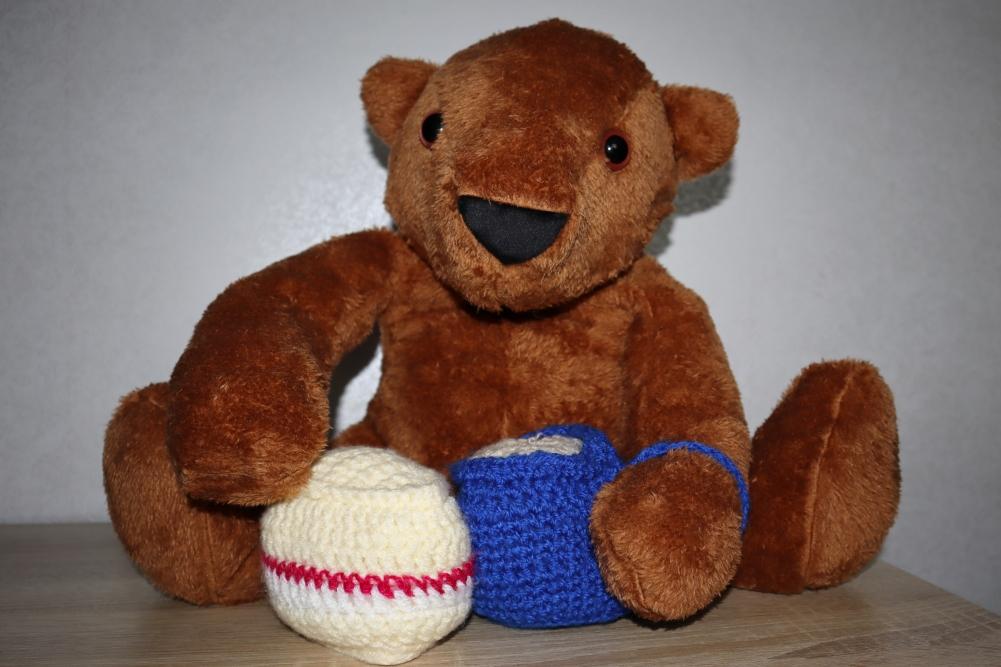
There's some fabrics I just can't resist, particularly fleece and faux furs that just encourage you to run your hand through the pile! So it probably comes as no surprise that this month I've chosen to make something from this chestnut faux fur fabric.
Because I like the feel of the fabric, I decided to use a polar bear pattern and make a brown bear. That still gives me an excuse to run my hand through the pile in the future! And just because the pattern says it's a polar bear, doesn't mean your bear can't be brown, black, blue or even pink.
As usual when it comes to making toys, I did not prewash my fabric. I wouldn't recommend the finished bears to be machine washed (even though in theory they could be), so I'm not worried about any potential shrinkage in the future. If I was making clothing from this fabric, I would definitely shake it outside to lose any excess fluff, then prewash it to just feel sure that my finished item wouldn't shrink in the wash!
The pattern I'm using is a pdf printable, so I've played around with making different sized bears. My original aim was to make a couple of regular 100% bears and one larger at 150%, but the fabric actually has a bit more drape to it than I was expecting. While this isn't problematic, I felt I didn't have enough patience to accurately sew the smaller pieces for the regular sized bears, so I went with two at 150% instead, which gives a finished seated bear height of 14".
Incidentally, printing the pattern off at 150% also increases the seam allowance from 1/4" to 3/8". This is a huge advantage for me, as 3/8" is the same width as my presser foot so it's nice and easy to line everything up. It also means the fabric feeds through evenly as it's not just over one side of the feed dogs. Of course you could always redraw the pattern piece with a larger (or smaller) seam allowance if you preferred.
All fabric that has a pile, will inevitably have some fabric fluff caught up in it when it arrives. You could shake it outside, or just run your hand the wrong way through the pile to gather up any loose fluff. It might seem like you could skip this step, but if you do then there's going to be fluff everywhere. I expected some on the carpet, but not attracted to and stuck on my wallpaper!
In the past, I've accidentally drawn pattern pieces on faux fur fabric with the pile running in the wrong direction, so I now draw an arrow showing the direction of the nap on a corner on the reverse of the fabric just to remind me which way is which. Because the fabric has a pile, it's not possible to cut the pieces on the fold – each pattern piece has to be traced off, remembering to mirror the pieces you need two of (otherwise your bear might end up with two left legs!).
I used a heat erasable pen to trace the pattern pieces, but a water erasable pen would've been a lot more logical as I wasn't going to go near this faux fur with an iron! I wouldn't recommend pinning the pattern pieces as it's really hard to get the fabric and pattern piece to lie totally flat when it's pinned.
Ready to start cutting? Well put down those really nice dressmaking shears with the long blade – they will be no use on this project at all. What we need to be using are some sharp but shorter bladed scissors, as we only want to cut the backing fabric. I've been using needlework scissors as they are really sharp which makes it easier to accurately cut the backing fabric. Ideally we won't catch any of the fur pile with the scissors at all, so just take very small neat snips from the backing to follow the traced line. This is probably the most tedious part, but it's worth spending that little extra time over, just to make sure the faux fur hasn't been given a haircut!
Now all the pieces are cut out, give them a quick shake (or run your hand through the pile again) just to lose the fluff. I found the fluff ended up everywhere – all over me, stuck to the wallpaper, and over the carpet. A lint roller (sticky tape can work just as well) would be an essential at this point, just to tidy things up a little before we actually get sewing!
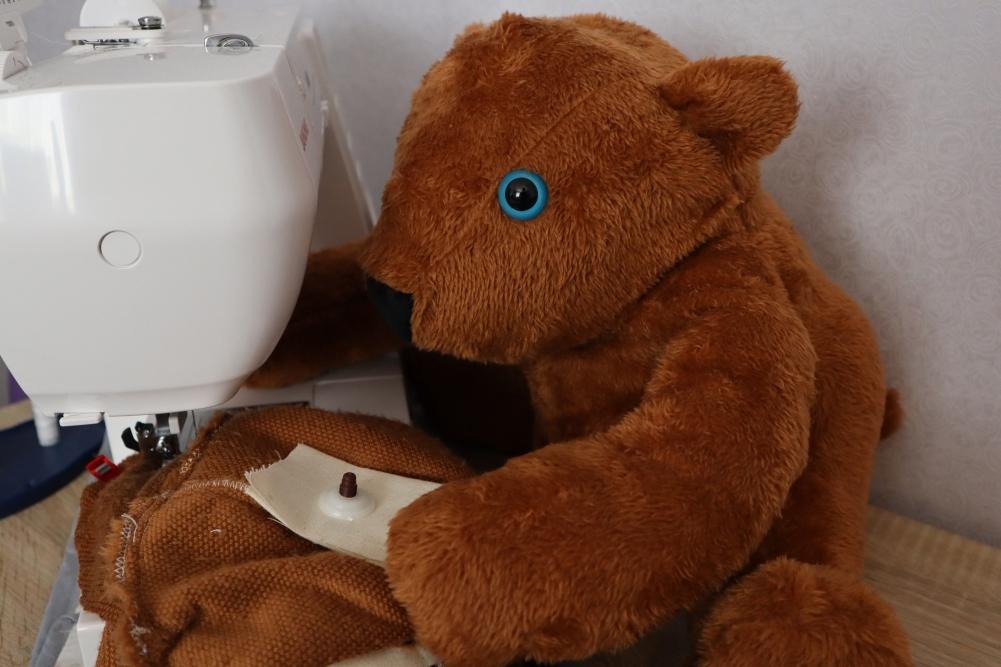
Finally, we're ready to sew! Normally I'd try and match my thread colours, but with a short pile fabric like this, you don't actually see any stitches, so I was able to use just a plain white. This also came in handy when I needed to unpick a couple of seams, as the stitches were nice and visible!
Despite the fabric having some stretch, I stuck with a regular straight stitch for the seams, but shortened it from my machine's standard stitch length. If I was sewing an item of clothing, I would have used a stretch stitch just to stop the stitches from breaking as the item is worn.
I also lowered the pressure on the presser foot to the minimum my machine would allow. This made the curves a little easier to sew and allowed me to move the fabric around the curve without risking it stretching out.
I wasn't going to risk getting near the fabric with an iron, so iron-on interfacing was a no-go for stabilising the eye holes. Instead, I cut a small piece of folded calico, snipped a small hole in the centre, and used that to add a little strength to the eyeholes. You could also use a tiny drip of fraycheck to stop there being any risk of the fabric fraying over time, although I wouldn't recommend that if you're making a toy for a child.
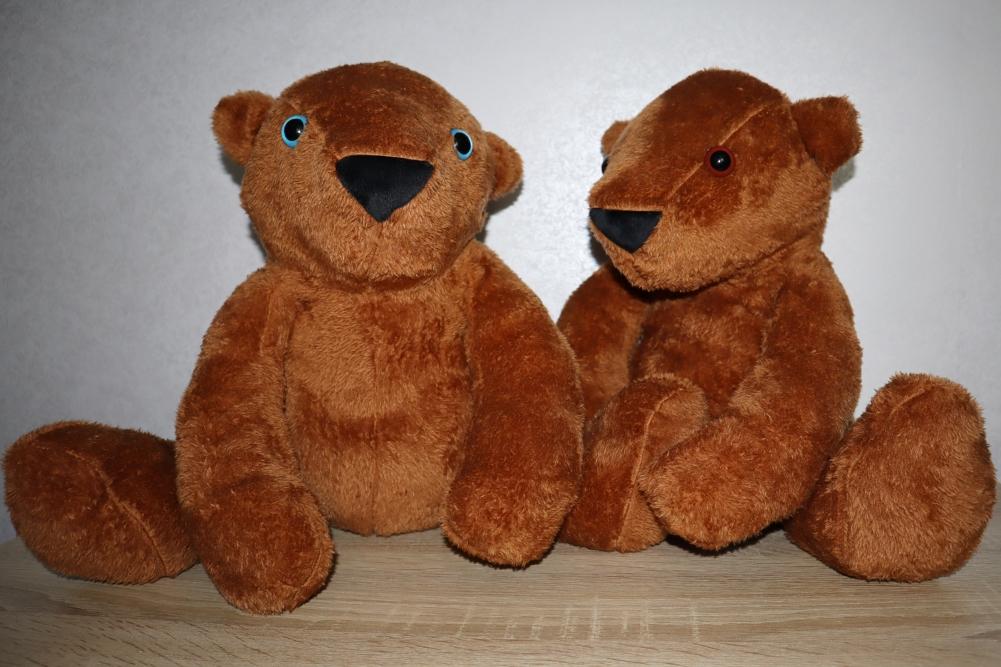
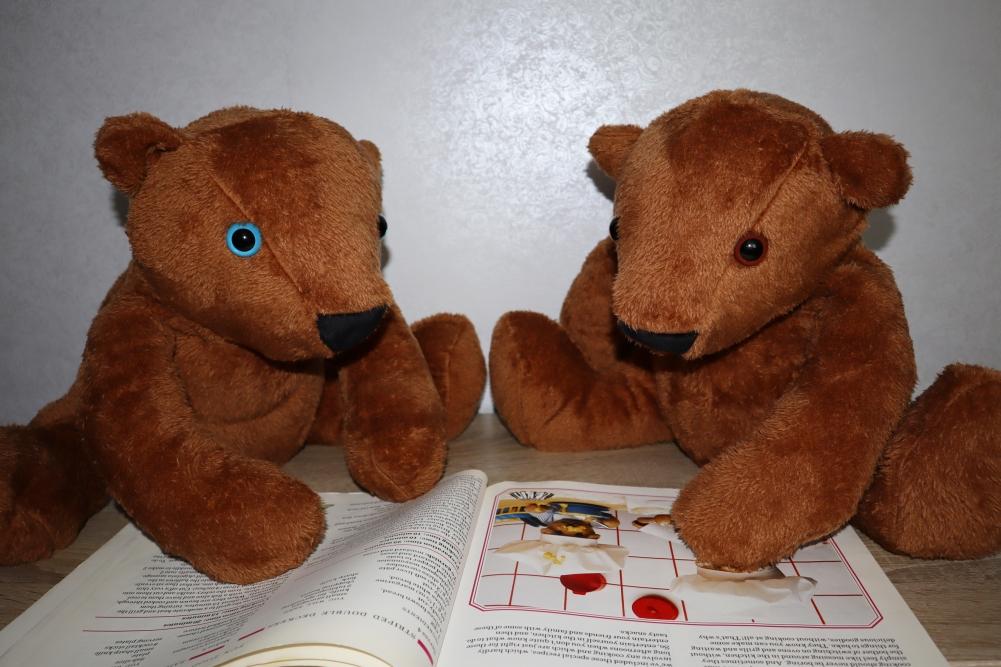
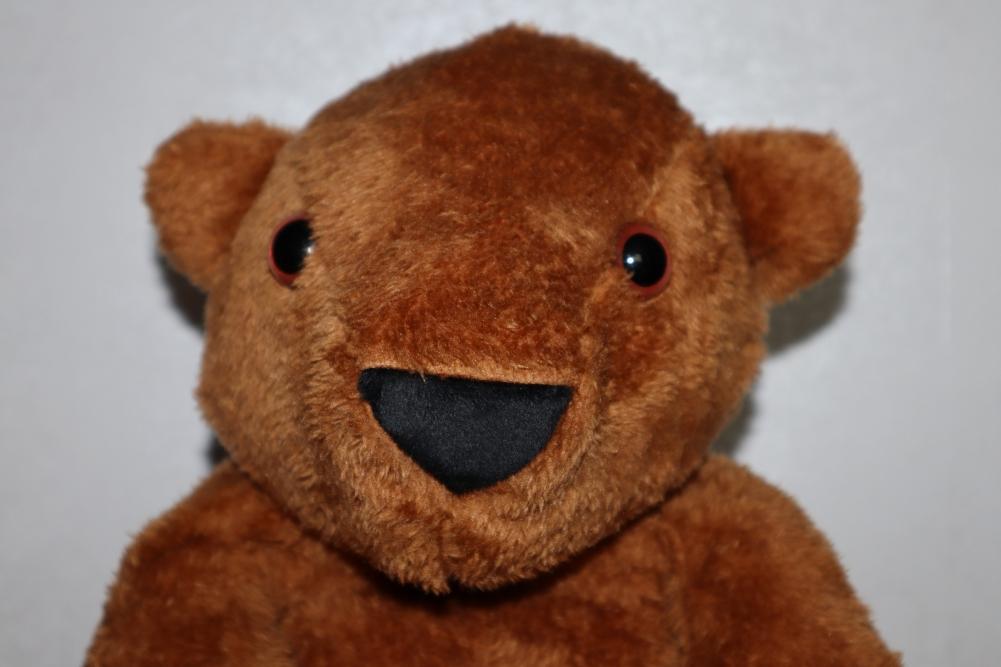
I had a couple of pairs of 22mm eyes lurking my sewing bag, which seem the perfect size for a 150% bear, although the brown ones were a much better option – the blue ones don't look quite right for the shade of fur. I prefer the coloured eyes for larger bears, as I find larger plain black eyes can look a little scary.
I used some sleek black fleece scraps I had lying around for their noses, but felt would work equally well. It helps if the nose fabric has a similar amount of stretch to the main body.
After I stitched each seam on the brown-eyed bear, I used my machine's faux overlock stitch to hold both raw edges together. The stretch of the fabric means you don't need to clip corners or anything like that, but normally you wouldn't need to finish any raw edges on a toy as they are all enclosed.
I don't know if it really makes a difference, but I felt it might add a little stability to the seams.
It's almost impossible to accurately say how much stuffing you'd need, as some people prefer to over-stuff their bears to make them have a firm traditional feel, whereas others prefer to under-stuff for a more squishy, cuddly bear. I used just over 200 grams of stuffing for the blue-eyed bear, and probably could have put a little more into his muzzle just to see if it would hold its shape a little better.
I used smaller pieces of stuffing when I was adding it to the brown-eyed bear, and he actually took under 200 grams of stuffing to get to a suitably cuddly feel. That includes a very small amount of stuffing in the brown-eyed bear's ears, just to give them a little more shape. Looking at both bears once they were stuffed, the brown-eyed one is a smidge taller and doesn't look quite so chubby, whereas the blue-eyed one is quite wide.
I can never decide on what the 'right' amount of stuffing is for a toy, so I always close the back seam temporarily with clips and leave them overnight. Then the next day I can test how squishy they feel and make a final decision on if they need any more (or less!) stuffing before sewing the seam up by hand. To make that seam extra strong, I double the thread before ladder stitching the seam, making sure to bury the knot in the fabric at the end.
That just leaves one final thing to do... no, not play with the bears (although that is fun), grab that vacuum cleaner and hoover up the fluff from the carpet and anywhere else it might be stuck!
Thank you Minerva for the opportunity to experiment and make something fun with this faux fur, and I hope I've inspired you to maybe take the plunge and try making your own bear!
#MinervaBrandAmbassador, #MinervaMakes #MinervaMakers #DragonSews #plush #toy #FauxFur #bear #FreePattern #IndiePatterns #ISew #MeMade #MeMades #sewing #sewist #sewists #SewingInspo #SewingInspiration #sew #sewcialist #SewingProject #SewingProjects #SewingIdeas #SewingProjectIdeas #SewingPatternInspo #LoveSewing #ILoveSewing #SewSewSew #SewersGonnaSew #MakersGonnaMake #sewaholic #sewaholics #ShareYourSewing #SewingLove #FabricInspo #seamstress #MeMadeEveryday
Polar Bear pattern - Simply Sewing magazine, issue 24. I printed the pattern off at 150% to make a bear that's approximately 14 inches tall (seated).
(templates can be downloaded from https://www.gathered.how/sewing-and-quilting/sewing/simply-sewing-patterns-templates/ but the instructions are only in the magazine)
Because I like the feel of the fabric, I decided to use a polar bear pattern and make a brown bear. That still gives me an excuse to run my hand through the pile in the future! And just because the pattern says it's a polar bear, doesn't mean your bear can't be brown, black, blue or even pink.
As usual when it comes to making toys, I did not prewash my fabric. I wouldn't recommend the finished bears to be machine washed (even though in theory they could be), so I'm not worried about any potential shrinkage in the future. If I was making clothing from this fabric, I would definitely shake it outside to lose any excess fluff, then prewash it to just feel sure that my finished item wouldn't shrink in the wash!
The pattern I'm using is a pdf printable, so I've played around with making different sized bears. My original aim was to make a couple of regular 100% bears and one larger at 150%, but the fabric actually has a bit more drape to it than I was expecting. While this isn't problematic, I felt I didn't have enough patience to accurately sew the smaller pieces for the regular sized bears, so I went with two at 150% instead, which gives a finished seated bear height of 14".
Incidentally, printing the pattern off at 150% also increases the seam allowance from 1/4" to 3/8". This is a huge advantage for me, as 3/8" is the same width as my presser foot so it's nice and easy to line everything up. It also means the fabric feeds through evenly as it's not just over one side of the feed dogs. Of course you could always redraw the pattern piece with a larger (or smaller) seam allowance if you preferred.
All fabric that has a pile, will inevitably have some fabric fluff caught up in it when it arrives. You could shake it outside, or just run your hand the wrong way through the pile to gather up any loose fluff. It might seem like you could skip this step, but if you do then there's going to be fluff everywhere. I expected some on the carpet, but not attracted to and stuck on my wallpaper!
In the past, I've accidentally drawn pattern pieces on faux fur fabric with the pile running in the wrong direction, so I now draw an arrow showing the direction of the nap on a corner on the reverse of the fabric just to remind me which way is which. Because the fabric has a pile, it's not possible to cut the pieces on the fold – each pattern piece has to be traced off, remembering to mirror the pieces you need two of (otherwise your bear might end up with two left legs!).
I used a heat erasable pen to trace the pattern pieces, but a water erasable pen would've been a lot more logical as I wasn't going to go near this faux fur with an iron! I wouldn't recommend pinning the pattern pieces as it's really hard to get the fabric and pattern piece to lie totally flat when it's pinned.
Ready to start cutting? Well put down those really nice dressmaking shears with the long blade – they will be no use on this project at all. What we need to be using are some sharp but shorter bladed scissors, as we only want to cut the backing fabric. I've been using needlework scissors as they are really sharp which makes it easier to accurately cut the backing fabric. Ideally we won't catch any of the fur pile with the scissors at all, so just take very small neat snips from the backing to follow the traced line. This is probably the most tedious part, but it's worth spending that little extra time over, just to make sure the faux fur hasn't been given a haircut!
Now all the pieces are cut out, give them a quick shake (or run your hand through the pile again) just to lose the fluff. I found the fluff ended up everywhere – all over me, stuck to the wallpaper, and over the carpet. A lint roller (sticky tape can work just as well) would be an essential at this point, just to tidy things up a little before we actually get sewing!
Finally, we're ready to sew! Normally I'd try and match my thread colours, but with a short pile fabric like this, you don't actually see any stitches, so I was able to use just a plain white. This also came in handy when I needed to unpick a couple of seams, as the stitches were nice and visible!
Despite the fabric having some stretch, I stuck with a regular straight stitch for the seams, but shortened it from my machine's standard stitch length. If I was sewing an item of clothing, I would have used a stretch stitch just to stop the stitches from breaking as the item is worn.
I also lowered the pressure on the presser foot to the minimum my machine would allow. This made the curves a little easier to sew and allowed me to move the fabric around the curve without risking it stretching out.
I wasn't going to risk getting near the fabric with an iron, so iron-on interfacing was a no-go for stabilising the eye holes. Instead, I cut a small piece of folded calico, snipped a small hole in the centre, and used that to add a little strength to the eyeholes. You could also use a tiny drip of fraycheck to stop there being any risk of the fabric fraying over time, although I wouldn't recommend that if you're making a toy for a child.
I had a couple of pairs of 22mm eyes lurking my sewing bag, which seem the perfect size for a 150% bear, although the brown ones were a much better option – the blue ones don't look quite right for the shade of fur. I prefer the coloured eyes for larger bears, as I find larger plain black eyes can look a little scary.
I used some sleek black fleece scraps I had lying around for their noses, but felt would work equally well. It helps if the nose fabric has a similar amount of stretch to the main body.
After I stitched each seam on the brown-eyed bear, I used my machine's faux overlock stitch to hold both raw edges together. The stretch of the fabric means you don't need to clip corners or anything like that, but normally you wouldn't need to finish any raw edges on a toy as they are all enclosed.
I don't know if it really makes a difference, but I felt it might add a little stability to the seams.
It's almost impossible to accurately say how much stuffing you'd need, as some people prefer to over-stuff their bears to make them have a firm traditional feel, whereas others prefer to under-stuff for a more squishy, cuddly bear. I used just over 200 grams of stuffing for the blue-eyed bear, and probably could have put a little more into his muzzle just to see if it would hold its shape a little better.
I used smaller pieces of stuffing when I was adding it to the brown-eyed bear, and he actually took under 200 grams of stuffing to get to a suitably cuddly feel. That includes a very small amount of stuffing in the brown-eyed bear's ears, just to give them a little more shape. Looking at both bears once they were stuffed, the brown-eyed one is a smidge taller and doesn't look quite so chubby, whereas the blue-eyed one is quite wide.
I can never decide on what the 'right' amount of stuffing is for a toy, so I always close the back seam temporarily with clips and leave them overnight. Then the next day I can test how squishy they feel and make a final decision on if they need any more (or less!) stuffing before sewing the seam up by hand. To make that seam extra strong, I double the thread before ladder stitching the seam, making sure to bury the knot in the fabric at the end.
That just leaves one final thing to do... no, not play with the bears (although that is fun), grab that vacuum cleaner and hoover up the fluff from the carpet and anywhere else it might be stuck!
Thank you Minerva for the opportunity to experiment and make something fun with this faux fur, and I hope I've inspired you to maybe take the plunge and try making your own bear!
#MinervaBrandAmbassador, #MinervaMakes #MinervaMakers #DragonSews #plush #toy #FauxFur #bear #FreePattern #IndiePatterns #ISew #MeMade #MeMades #sewing #sewist #sewists #SewingInspo #SewingInspiration #sew #sewcialist #SewingProject #SewingProjects #SewingIdeas #SewingProjectIdeas #SewingPatternInspo #LoveSewing #ILoveSewing #SewSewSew #SewersGonnaSew #MakersGonnaMake #sewaholic #sewaholics #ShareYourSewing #SewingLove #FabricInspo #seamstress #MeMadeEveryday
Polar Bear pattern - Simply Sewing magazine, issue 24. I printed the pattern off at 150% to make a bear that's approximately 14 inches tall (seated).
(templates can be downloaded from https://www.gathered.how/sewing-and-quilting/sewing/simply-sewing-patterns-templates/ but the instructions are only in the magazine)
Add all tagged items to your basket