


7 years ago
Center notches:
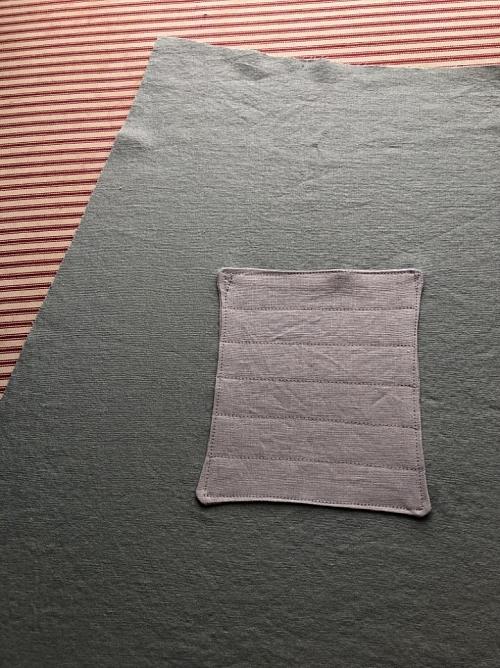
The pattern calls for aligning the center bodices to the center skirt pieces. The seam allowances in this pattern are not small so I decided to cut little notches along the bodices and skirt pieces. Cutting notches in these pieces helped me to more quickly align these locations after sewing the gathering stitches.
Adding FOLD arrows to the pattern pieces:
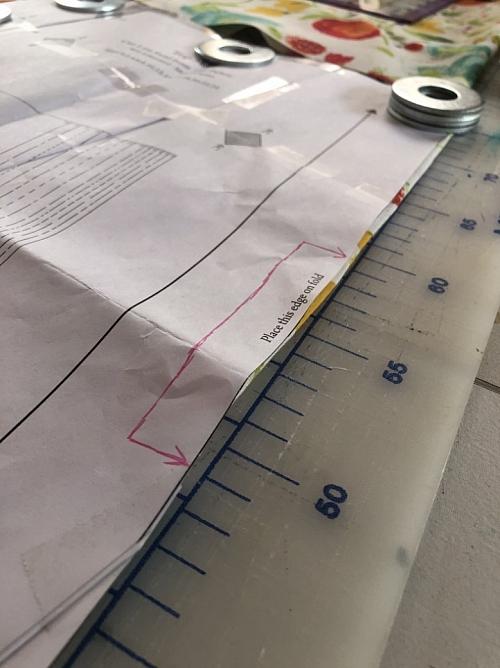
One benefit to making so many muslins is that you can make mistakes on the practice pieces. I found that the pattern pieces did not include the double arrows printed at the fold edges. I’m a visual person so I made this mistake on muslin 1 where I didn’t fold the fabric on the correct edge of the skirt for the top layer.
One quick fix (to help me not make this mistake on future versions), I took a pink ink pen and drew the double arrows at the FOLD edges to each of the pattern pieces that were marked FOLD.
Gathering the skirts:
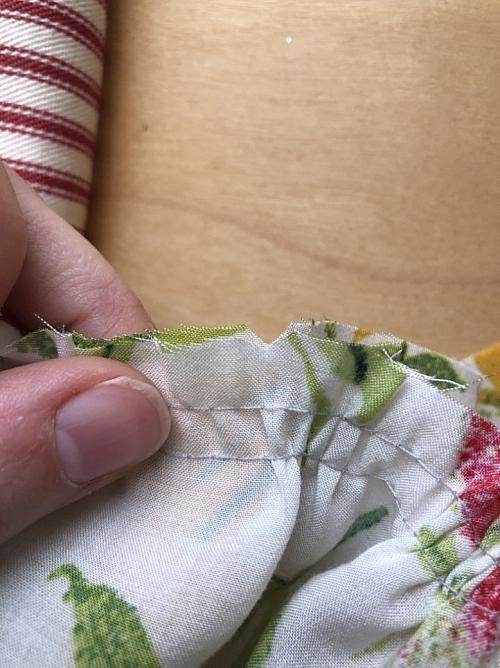
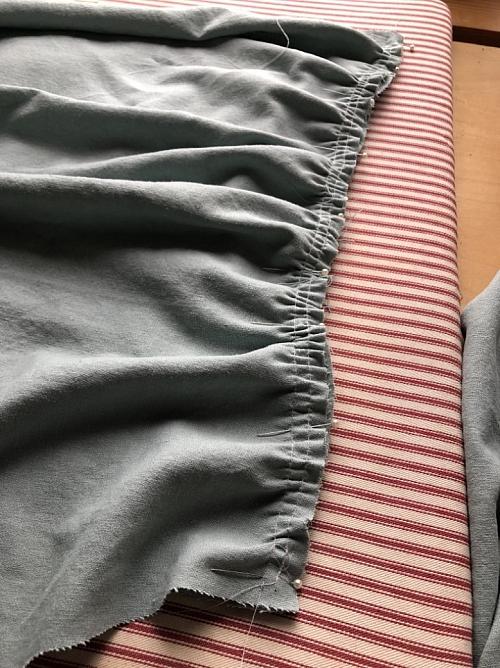
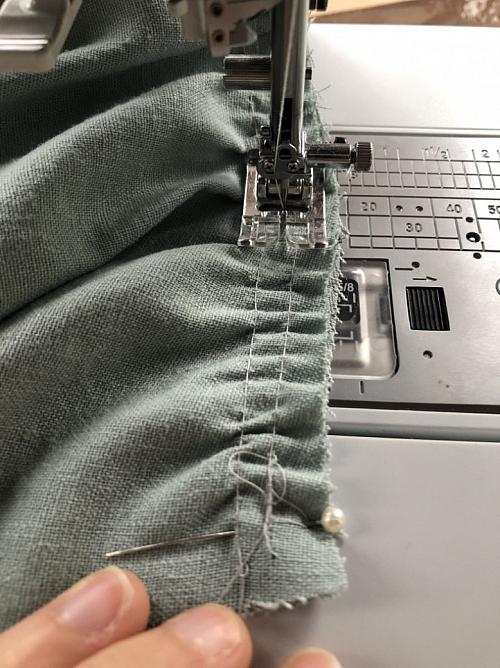
When gathering the skirts, I prefer to sew two lines of basting stitches. I sewed one at 3/8” (1 cm) and the second at 5/8” (1.6 cm). I really like this approach to gathering to help the result be a smooth and even finish.
I then sew a straight stitch line at ½” (1.3 cm) seam allowance (and then took out the basting threads).
Finishing tips: I love getting into the finishing details of a garment (in admittedly a very geeky way). I added some finishing details to the dress, just for fun.
Staystitch the necklines at ¼” (6mm) in the first step. I picked very lightweight fabrics for my final project. When sewing my previous muslins, I found that the necklines stretched out a bit so I knew that I wanted to add stay stitching the necklines to help stabilize the necklines.
Trim the seam allowances at the neckline and arm holes prior to turning the dress right side facing.
Sew rolled hems along the bottom of the skirts. This hem is reversible (which is more helpful on the underlayer, as you see both sides).
Top stitch the neckline and arm holes (after turning right side out). I did the top stitching with both threads (cream and blue) to match the fabrics.
I ironed both of the gathered seams up (toward the bodice). On the linen side of the dress I top stitched this seam to help reduce bulk. I found on the rayon fabric side I didn’t need to top stitch this seam as the fabric is very lightweight.
My standard sewing machine (Skyline S7) comes with an open needle plate and a straight stitch needle plate. I utilized a straight stitch needle plate when sewing the fabrics for the final project. I picked this needle plate to help prevent the fabric from pulling down in the needle plate with the lighter weight rayon fabric.
Final thoughts:
In the end, I really enjoy trying the fabric stabilizer for this dress. I washed and dried it after sewing and LOVED the softness that the fabric went back to (it’s original state). I appreciated the easier time that I had sewing the pre-treated rayon fabric.
You might ask, would you use a fabric stabilizer again? Admittedly, using the stabilizer added time to this project (pre-treating, letting the fabric dry, ironing the fabric before and after pretreating and then washing again after finishing). I may not use a spray on stabilizer in the future on rayons but I definitely would for more lightweight fabrics going forward (like chiffon, georgette or crepe fabrics). I really enjoyed trying this technique for this project and I loved how stable it made the fabric during the cutting and sewing process.
You might also ask, would you sew this dress again? I know I went a bit crazy with this project to make four versions of this dress. One fabric choice that I really like with gathered dresses are very lightweight fabrics. If I sew this dress again, I would really enjoy selecting lightweight fabrics for both sides of the dress. I love the flowy result that lighter weight fabrics bring to gathered skirts.
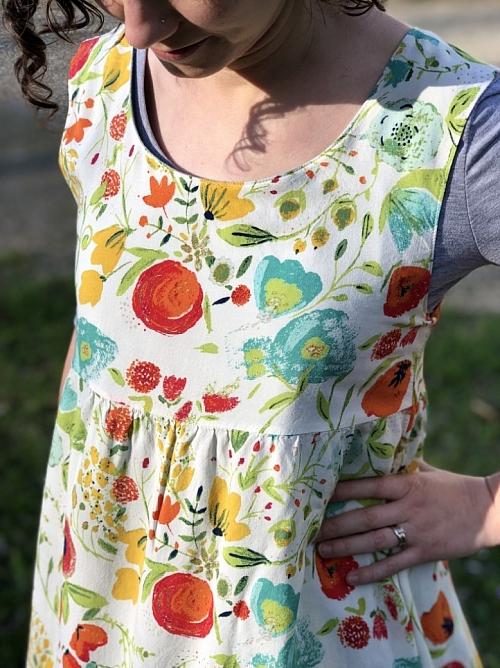
I’m really happy with the final dress! I LOVED the linen and rayon fabrics that I selected from Minerva. The rayon has such bright and beautiful tones in the floral pattern. The linen got even more beautifully soft with each wash. They are both very soft and I love the colors paired together. I did want to note that when I received the rayon and linen fabrics from Minerva, I finished the edges and washed and dried them twice (on warm in the washer and delicate in the dryer). This helps to shrink up and even out the fabric a bit before starting to sew with them.
Taking more time through the process of making this dress was so worth it, in the end. I’m really happy with having two dresses now with this one project. I look forward to bringing this dress along when I’m traveling for the versatility that comes with dresses in one garment.
Rachel @oakbluedesigns
www.oakbluedesigns.com
#minervamakes #minervamakers #isew #memade #memades #sewing #sewist #sewists #sewinginspo #sewinginspiration #sew #sewcialist #sewingproject #sewingprojects #sewingideas #sewingprojectideas #sewingpatterninspo #lovesewing #ilovesewing #sewsewsew #sewersgonnasew #makersgonnamake #sewaholic #sewaholics #shareyoursewing #sewinglove #handmadewardrobe #handemadeclothes #isewmyclothes #diyclothes #dressmaking #fabricinspo #seamstress #memadeeveryday #imakemyclothes #imakemyownclothes #fashion #fashioninspo #memadewardrobe #memadefashion #diyfashion #diywardrobe #fashionsewing #indiepatterns #indiesewingpatterns #sewliberatedpatterns #sewliberatedmetamorphicdress #metamorphicdress #sewingdresses #summerdress #summersewing #dresswithpockets #dresseswithpockets #robertkaufmanfabrics #brusselwasherfabric #artgalleryfabrics #artgallerybudquetteabloom #sewingwithchallis #challissewingprojects #sewingwithlinenlook #linenlooksewingprojects
The pattern calls for aligning the center bodices to the center skirt pieces. The seam allowances in this pattern are not small so I decided to cut little notches along the bodices and skirt pieces. Cutting notches in these pieces helped me to more quickly align these locations after sewing the gathering stitches.
Adding FOLD arrows to the pattern pieces:
One benefit to making so many muslins is that you can make mistakes on the practice pieces. I found that the pattern pieces did not include the double arrows printed at the fold edges. I’m a visual person so I made this mistake on muslin 1 where I didn’t fold the fabric on the correct edge of the skirt for the top layer.
One quick fix (to help me not make this mistake on future versions), I took a pink ink pen and drew the double arrows at the FOLD edges to each of the pattern pieces that were marked FOLD.
Gathering the skirts:
When gathering the skirts, I prefer to sew two lines of basting stitches. I sewed one at 3/8” (1 cm) and the second at 5/8” (1.6 cm). I really like this approach to gathering to help the result be a smooth and even finish.
I then sew a straight stitch line at ½” (1.3 cm) seam allowance (and then took out the basting threads).
Finishing tips: I love getting into the finishing details of a garment (in admittedly a very geeky way). I added some finishing details to the dress, just for fun.
Staystitch the necklines at ¼” (6mm) in the first step. I picked very lightweight fabrics for my final project. When sewing my previous muslins, I found that the necklines stretched out a bit so I knew that I wanted to add stay stitching the necklines to help stabilize the necklines.
Trim the seam allowances at the neckline and arm holes prior to turning the dress right side facing.
Sew rolled hems along the bottom of the skirts. This hem is reversible (which is more helpful on the underlayer, as you see both sides).
Top stitch the neckline and arm holes (after turning right side out). I did the top stitching with both threads (cream and blue) to match the fabrics.
I ironed both of the gathered seams up (toward the bodice). On the linen side of the dress I top stitched this seam to help reduce bulk. I found on the rayon fabric side I didn’t need to top stitch this seam as the fabric is very lightweight.
My standard sewing machine (Skyline S7) comes with an open needle plate and a straight stitch needle plate. I utilized a straight stitch needle plate when sewing the fabrics for the final project. I picked this needle plate to help prevent the fabric from pulling down in the needle plate with the lighter weight rayon fabric.
Final thoughts:
In the end, I really enjoy trying the fabric stabilizer for this dress. I washed and dried it after sewing and LOVED the softness that the fabric went back to (it’s original state). I appreciated the easier time that I had sewing the pre-treated rayon fabric.
You might ask, would you use a fabric stabilizer again? Admittedly, using the stabilizer added time to this project (pre-treating, letting the fabric dry, ironing the fabric before and after pretreating and then washing again after finishing). I may not use a spray on stabilizer in the future on rayons but I definitely would for more lightweight fabrics going forward (like chiffon, georgette or crepe fabrics). I really enjoyed trying this technique for this project and I loved how stable it made the fabric during the cutting and sewing process.
You might also ask, would you sew this dress again? I know I went a bit crazy with this project to make four versions of this dress. One fabric choice that I really like with gathered dresses are very lightweight fabrics. If I sew this dress again, I would really enjoy selecting lightweight fabrics for both sides of the dress. I love the flowy result that lighter weight fabrics bring to gathered skirts.
I’m really happy with the final dress! I LOVED the linen and rayon fabrics that I selected from Minerva. The rayon has such bright and beautiful tones in the floral pattern. The linen got even more beautifully soft with each wash. They are both very soft and I love the colors paired together. I did want to note that when I received the rayon and linen fabrics from Minerva, I finished the edges and washed and dried them twice (on warm in the washer and delicate in the dryer). This helps to shrink up and even out the fabric a bit before starting to sew with them.
Taking more time through the process of making this dress was so worth it, in the end. I’m really happy with having two dresses now with this one project. I look forward to bringing this dress along when I’m traveling for the versatility that comes with dresses in one garment.
Rachel @oakbluedesigns
www.oakbluedesigns.com
#minervamakes #minervamakers #isew #memade #memades #sewing #sewist #sewists #sewinginspo #sewinginspiration #sew #sewcialist #sewingproject #sewingprojects #sewingideas #sewingprojectideas #sewingpatterninspo #lovesewing #ilovesewing #sewsewsew #sewersgonnasew #makersgonnamake #sewaholic #sewaholics #shareyoursewing #sewinglove #handmadewardrobe #handemadeclothes #isewmyclothes #diyclothes #dressmaking #fabricinspo #seamstress #memadeeveryday #imakemyclothes #imakemyownclothes #fashion #fashioninspo #memadewardrobe #memadefashion #diyfashion #diywardrobe #fashionsewing #indiepatterns #indiesewingpatterns #sewliberatedpatterns #sewliberatedmetamorphicdress #metamorphicdress #sewingdresses #summerdress #summersewing #dresswithpockets #dresseswithpockets #robertkaufmanfabrics #brusselwasherfabric #artgalleryfabrics #artgallerybudquetteabloom #sewingwithchallis #challissewingprojects #sewingwithlinenlook #linenlooksewingprojects
Add all tagged items to your basket