


Hello! I’m quite excited to share about two projects that I’ve been working on. I’ll share the projects in a couple of posts but both were made with a fun Charmeuse Silky Satin fabric from Minerva. The print is called Pebble. It’s a fun print with an off-white background. The dots in the print are black, teal, and oranges. I affectionately call the print, Cruella de Vil meets art teacher. The shape of the black spots reminds me of a Dalmatian and the variations in the alternate colors reminds me of a painter’s palette. I was really intrigued with the print as semi-neutral with pops of color as well.
The Charmeuse fabric has an amazing drape to it. Before I washed the fabric, just holding it up and laying it in a pile on a table felt like pouring water into a cup (speaking to the fluidity feel of the drape in the fabric). I wanted to note that the fabric is sheer, you can see through it. The pattern that I used for the cami has a half lining built into the top. If you’re making a top that isn’t lined, you may want to add a lining or wear a cami under it.
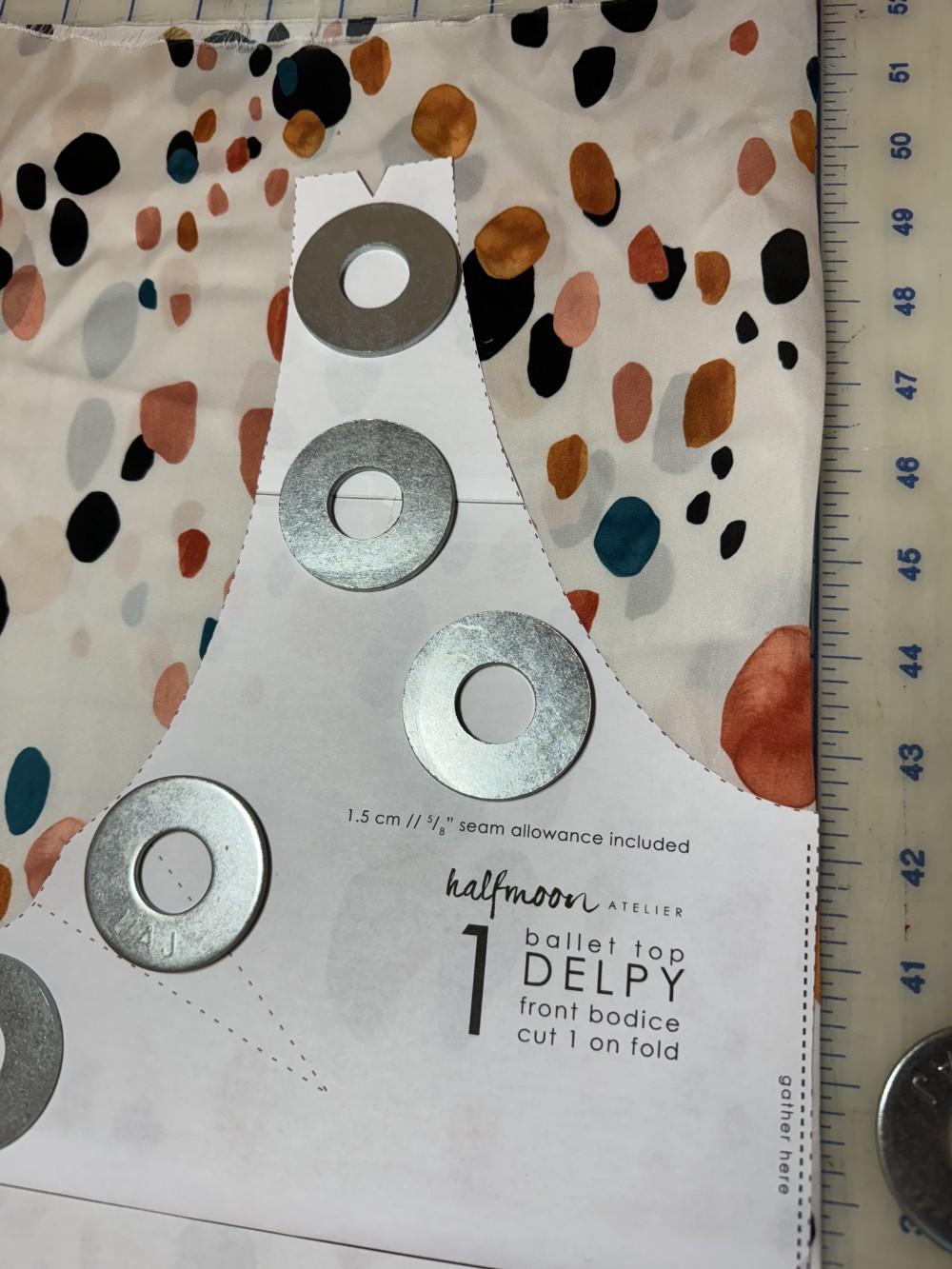
I’ve made the ballet top DELPY a few times, by Halfmoon Atelier. If you’re not familiar with the pattern, it includes:
A slip dress or a cami top.
Version A: Scoop back
Version B: Straight back
Version C: Cross back
I’ll share my size info here for reference:
Size: 4
View A
Full bust-34”, Natural Waist-27”
I wanted to note that I didn’t make any mods to the pattern.
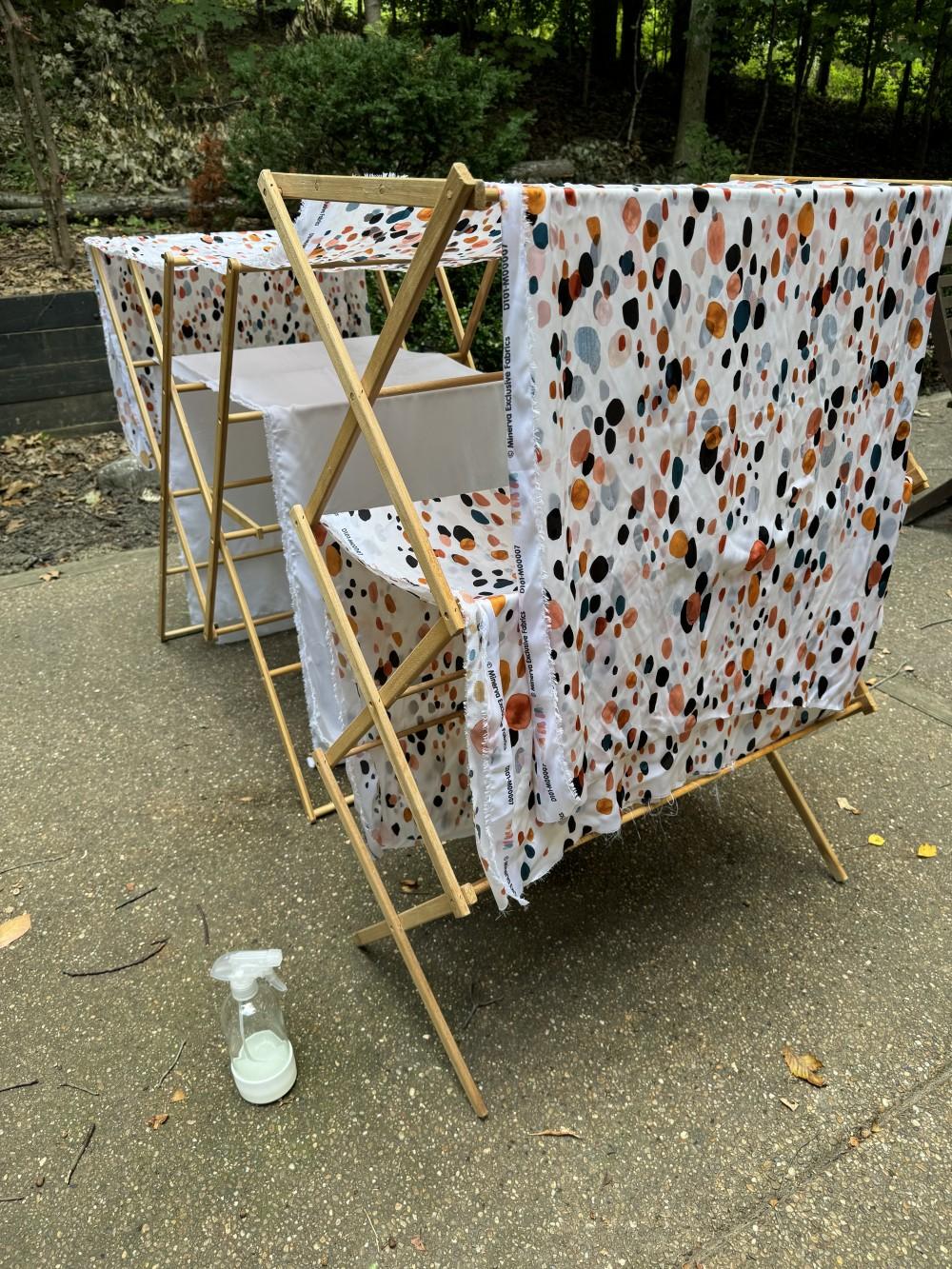
As this was a drapey fabric, I first washed and dryed the fabric in the washer/dryer. Then I treated the fabric with a starch/water mixture.
The spray bottle with the yellow liquid is a spray starch/water mixture that I mixed up in a water bottle. I’ve found when I take the time to stabilize a fluid fabric before working with it, it’s been worth it in the result. It’s easier to cut out and sew stabilized fabric. After the project is done, you can put the top in the washer/dryer and it washes out the starch. I will say that I wash and dry the fabric in the washing machine a few times before treating it with starch. I’ve shared a previous post on the starch method that like to use, for reference:
https://www.minerva.com/post/101791
After applying the starch mixture, I ironed the fabric with a dry iron and then cut out the pattern pieces.
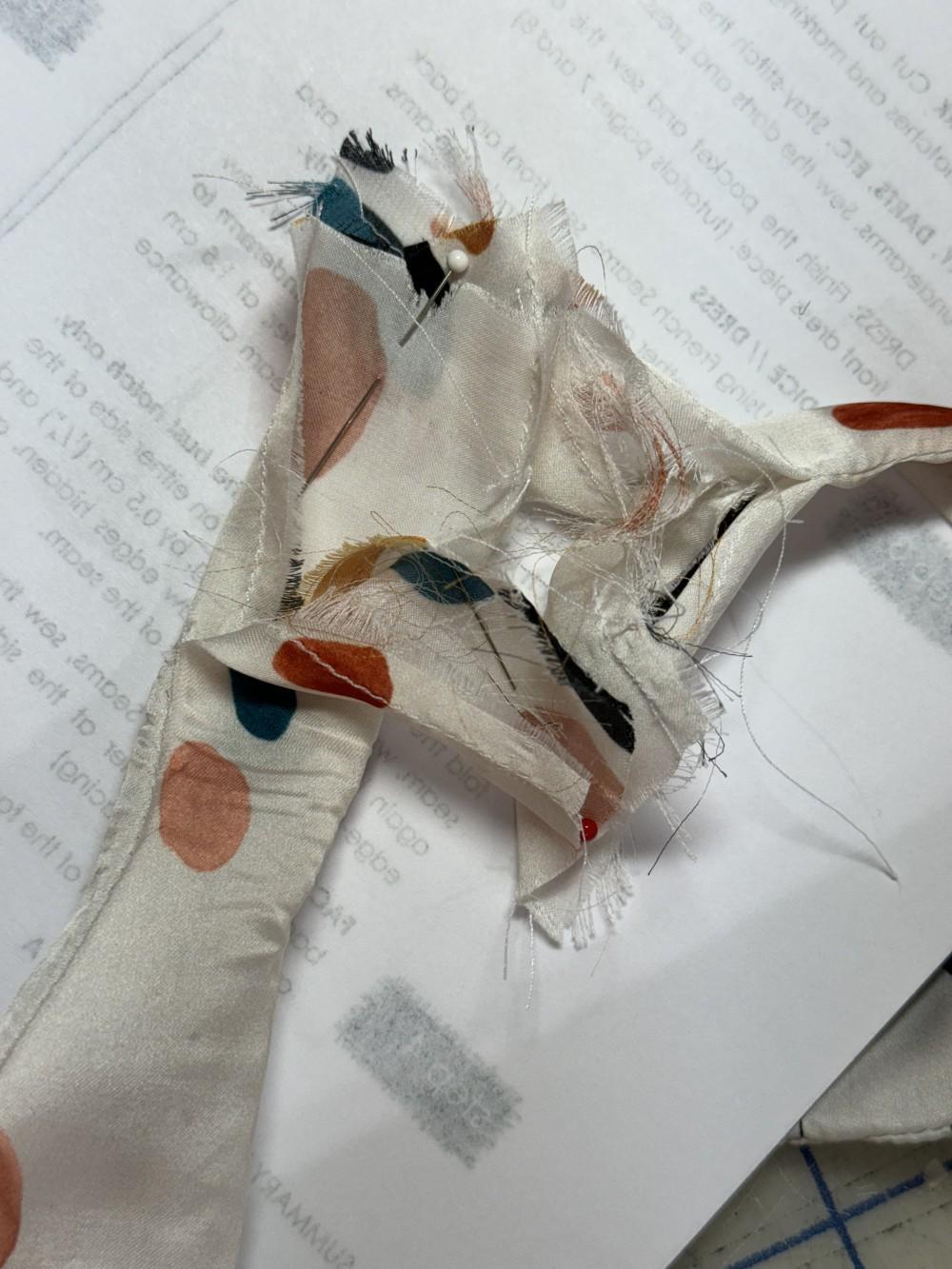
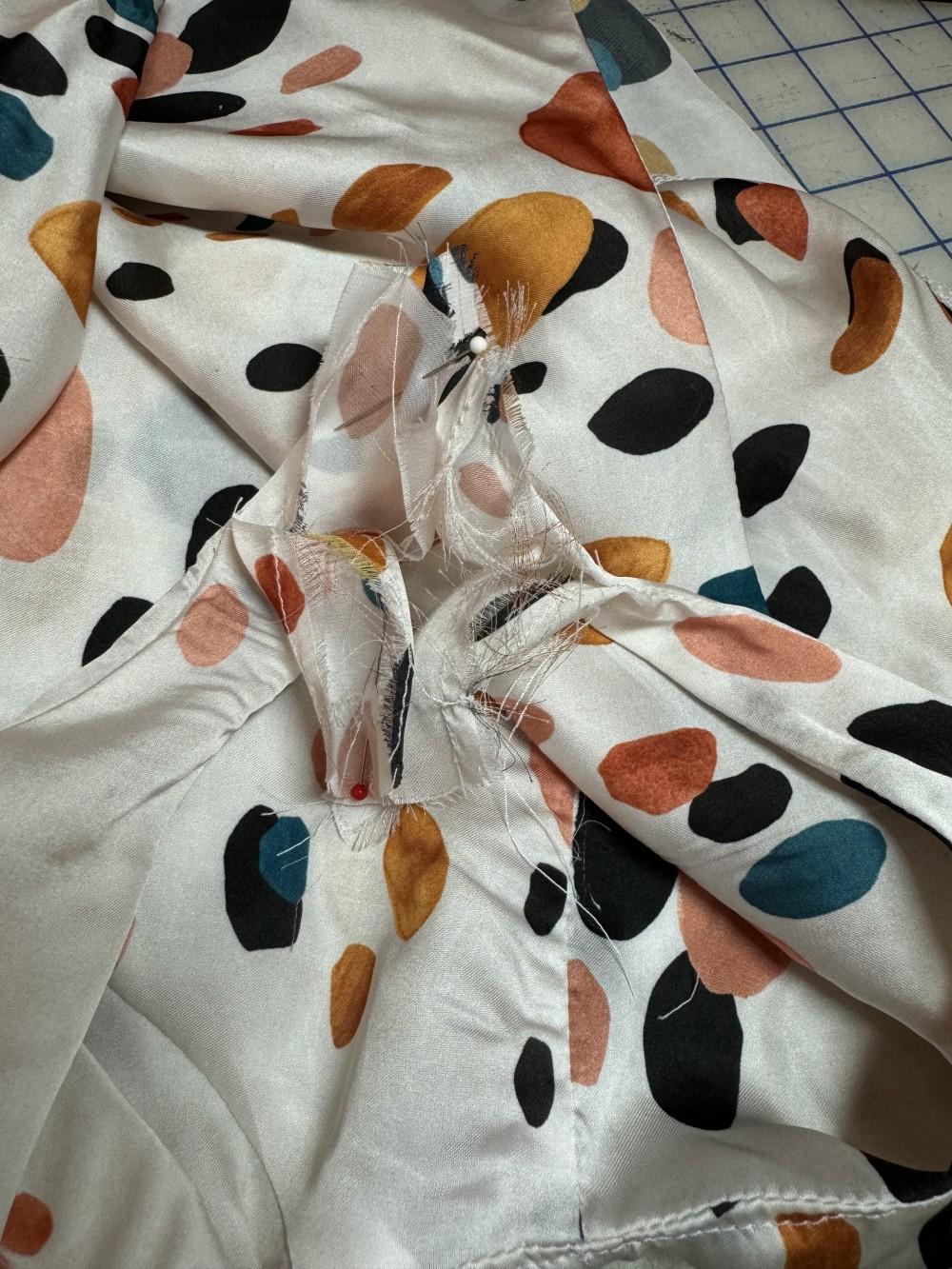
Along with the French seams included in the side seams, the pattern is quite detailed with finished/hidden seams for the straps as well. There is a sew-a-long on Halfmoon Atelier’s website, but I also included photos to reference this step as well (sewing the straps with hidden seams).
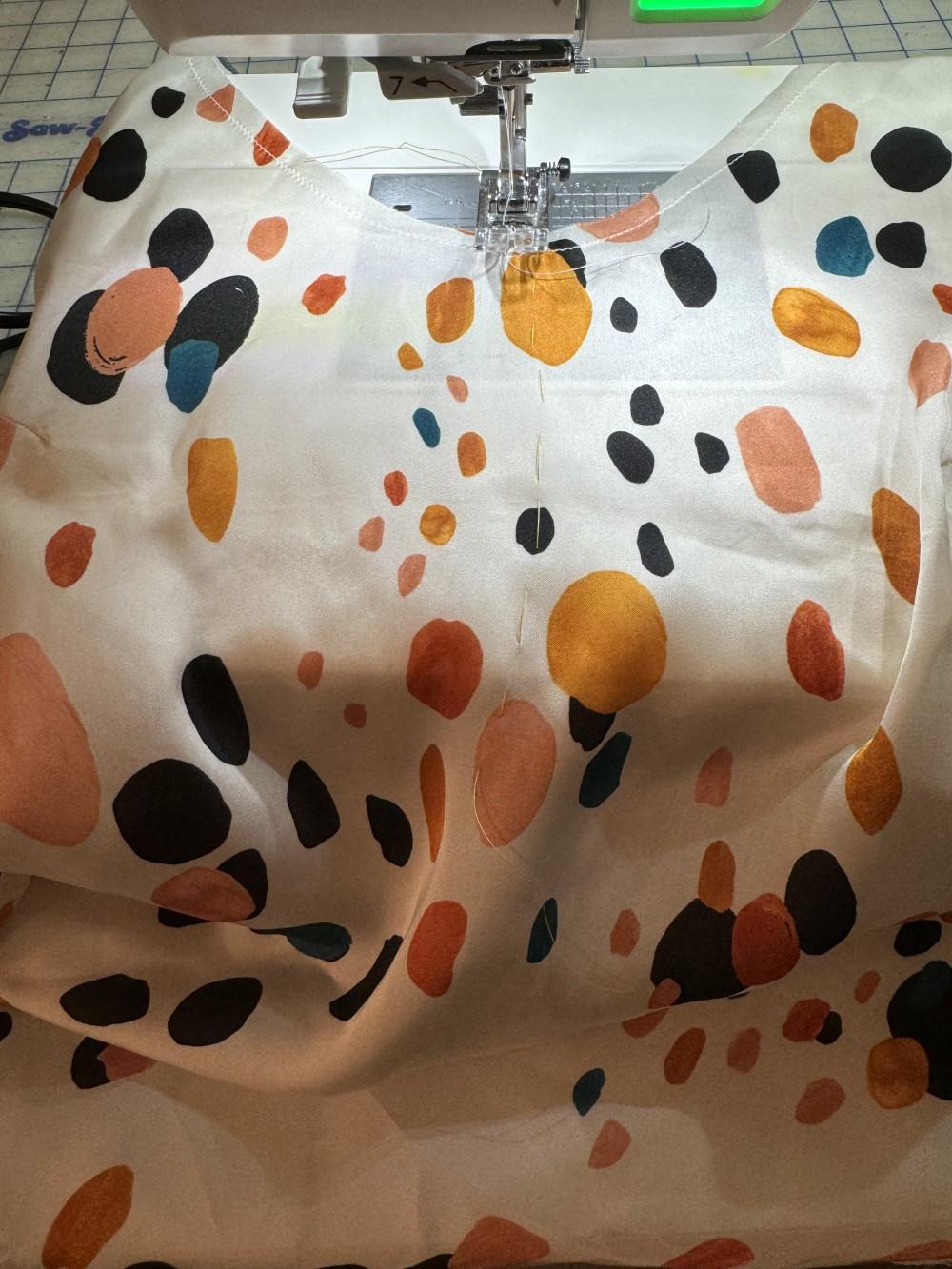
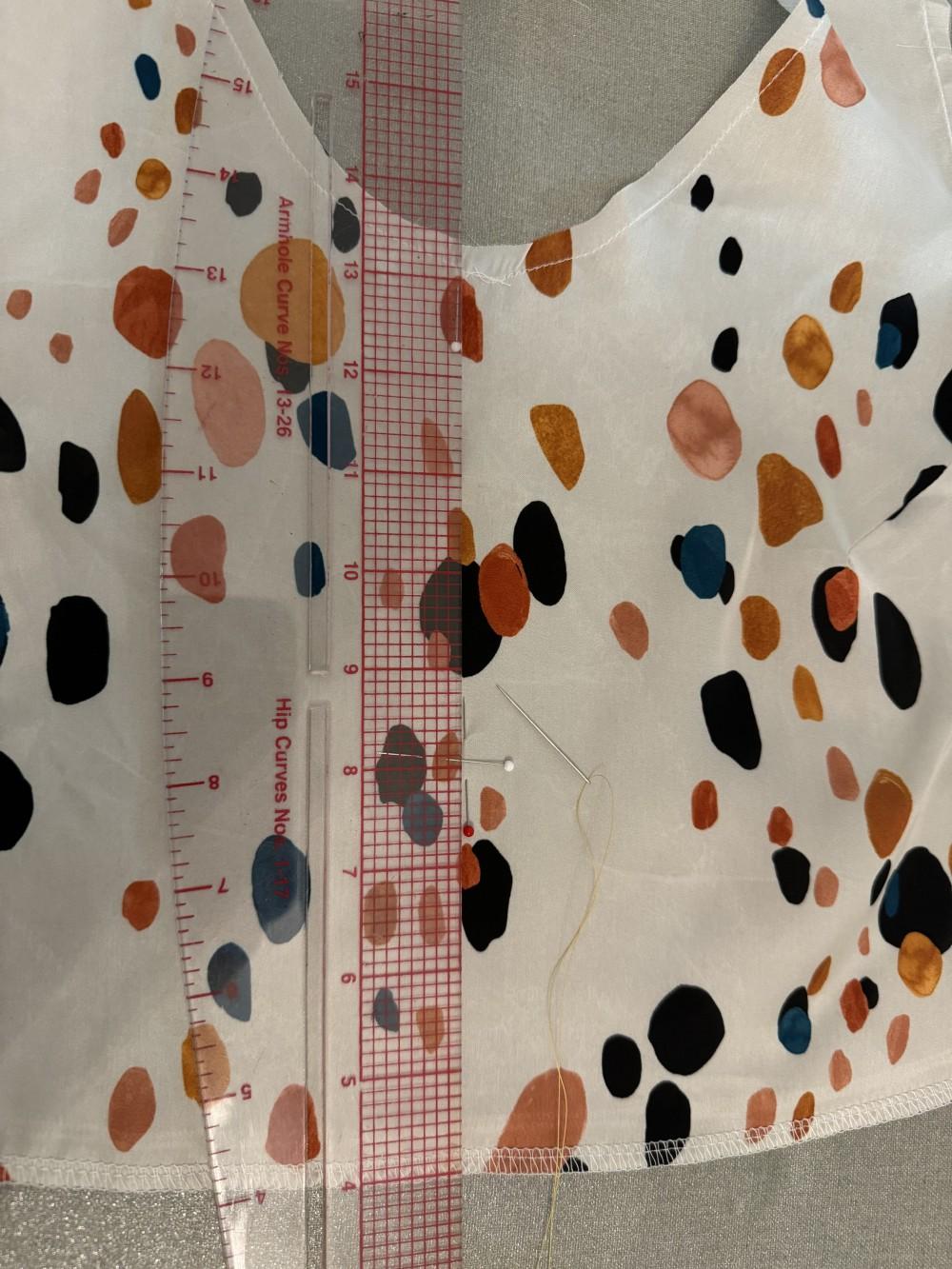
I hand basted the bust darts prior to sewing them on the sewing machine. I’ve started making this step a habit and I’ve always loved the result (hand basting with thread, first). I’ve enjoyed the accuracy of hand basting as a marking technique prior to sewing this seam on the sewing machine.
I also included a photo of ruching detail, pre-ruching. I decided to use thread to mark this location, prior to stitching on the sewing machine as well. The ruching is such a fun detail in this cami pattern that I’m quite drawn to.
As I sewed the scoop neck back, it partially covers my bra line. I’ve previously sewed the cross back and it did cover my bra line. I wanted to note that View A - View C has relatively the same height in the back of the top. I could have raised the height of the back by shortening the straps at the top center join. I wanted to include in a photo as a reference that my cami partially covers my bra line (which you wouldn’t see if I wear it with a blazer). Next time I would bring up the back a bit more by shortening the back straps.