



5 years ago
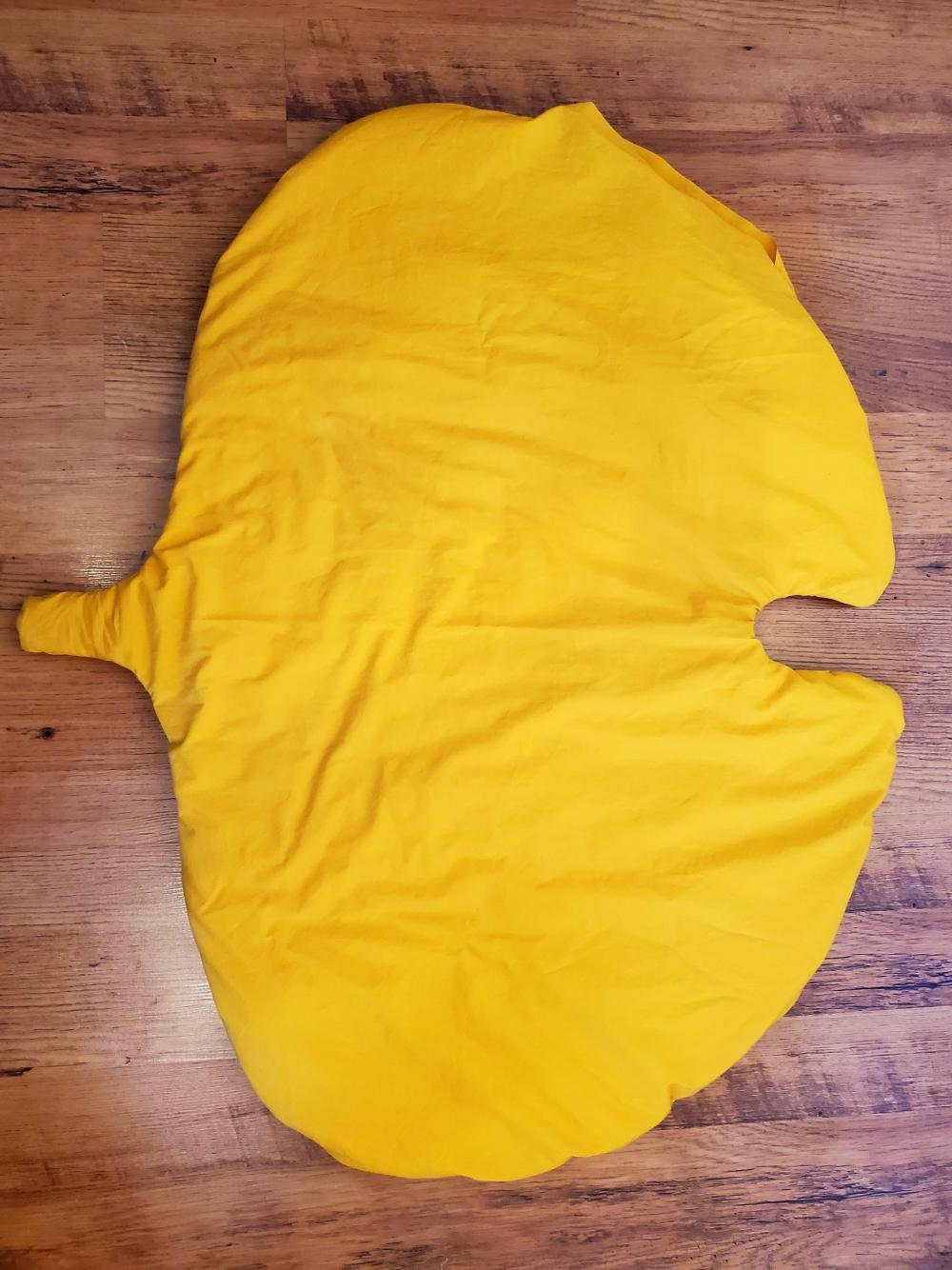
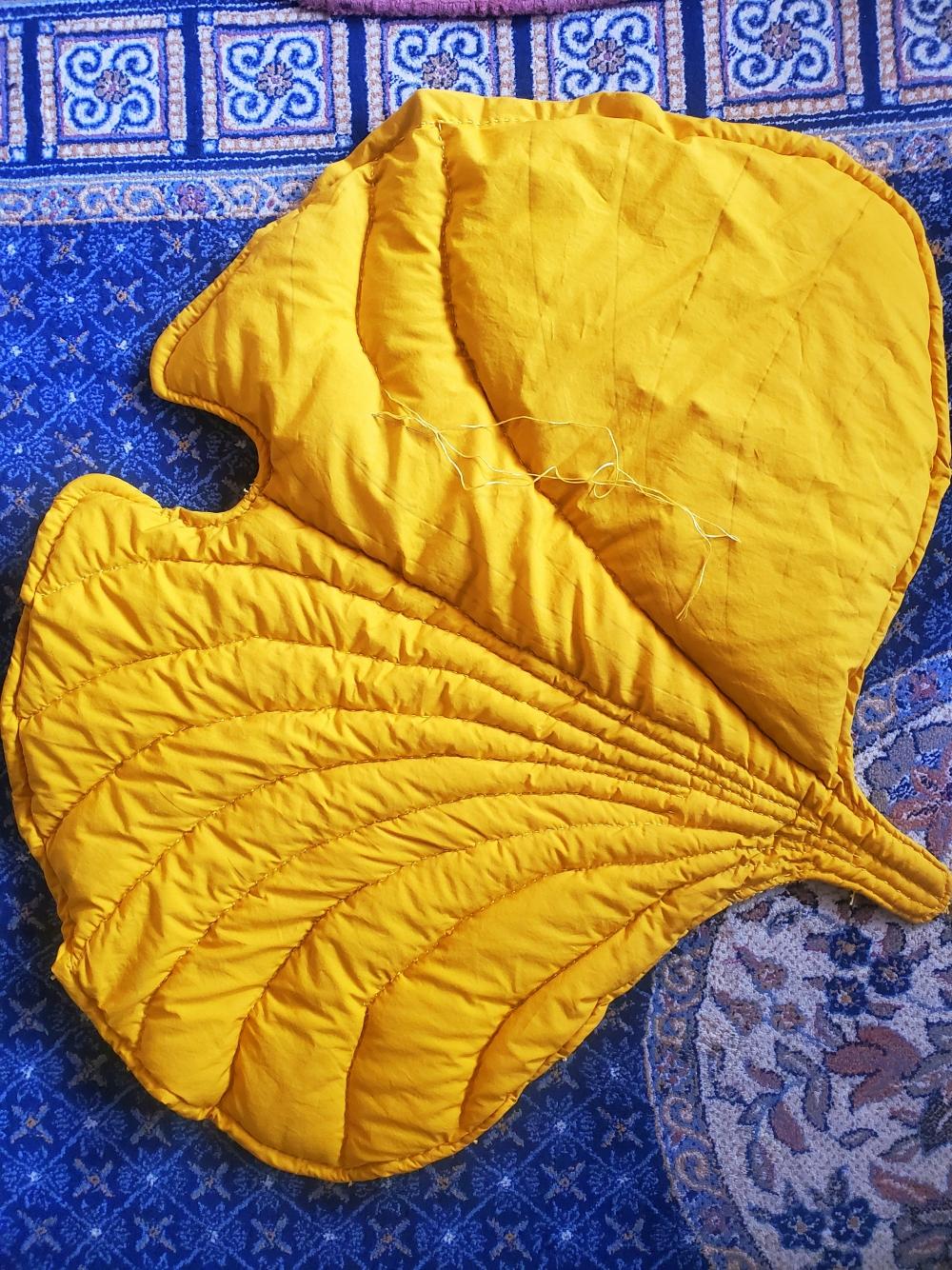
Hi Everyone! I'm Meinhilde from @kikucorner.com, and today I am sharing a quilted ginkgo leaf playmat that I sewed using Minerva's cotton poplin fabric in the Turmeric colourway.
I am expecting my first baby, so of course I want to make all the baby things! I had seen some quilted leaf playmats around the internet, and I decided I would try to make one myself. Of course the first step would be to decide which type of leaf to make. Some leaves are very intricate, with lots of leaflets or lobes. Since I wanted my playmat to cover as much floor as possible, I decided to use a ginkgo leaf. The shape is relatively simple yet also distinct, and it gives a good, large surface for a baby.
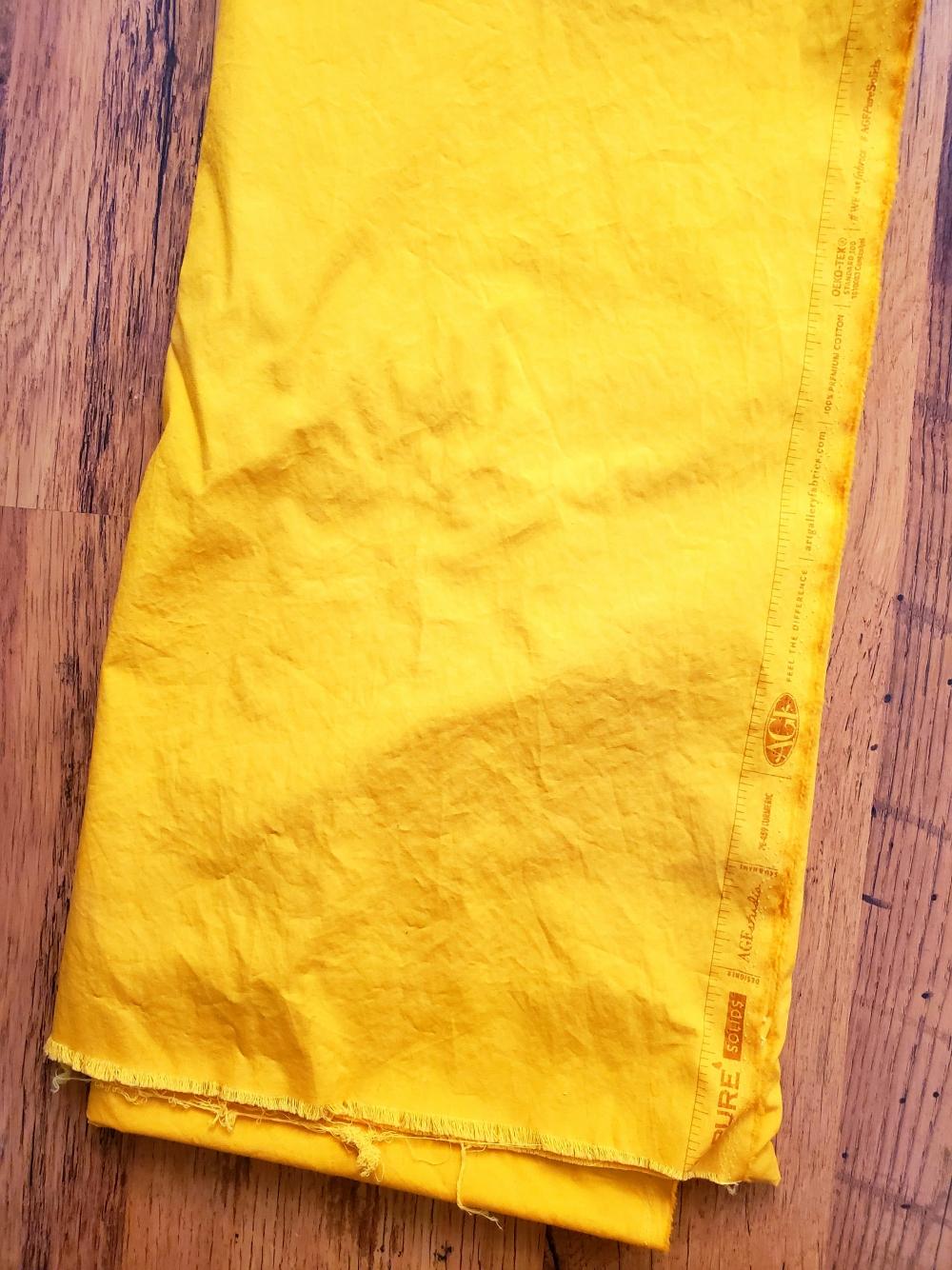
Then I had to decide on which fabric to use! Minerva's Cotton Poplin has a light, crisp feel and is available in many different colours. I got 2 m of the cotton poplin in the Turmeric colourway, a saturated, happy yellow. Toronto had a cold snap after a long, warm summer, and it took a lot of the trees by surprise! Normally ginkgo tree leaves turn from light green to bright yellow in the autumn, but this year the cold snap caused all the green leaves to fall off. Yellow is one of my favourite colours, so I decided to pay tribute to the ginkgo leaves of autumn with the Turmeric colourway.
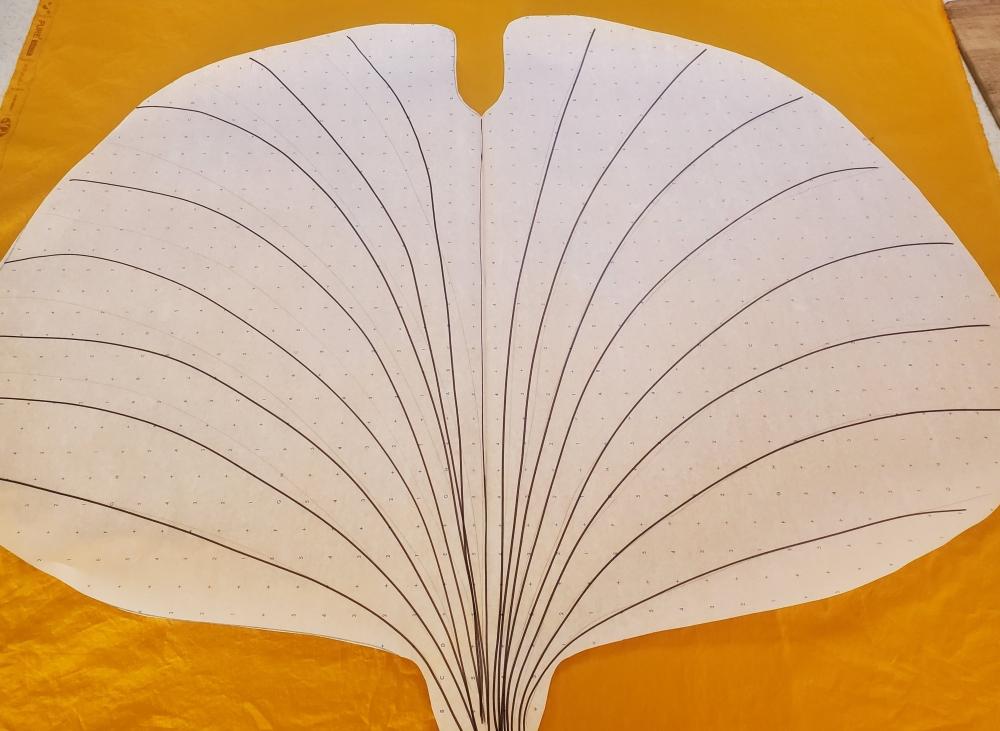
To design the playmat, I folded a big piece of tracing paper in half and drew a half ginkgo leaf. Then, I cut it out. This makes the pattern symmetrical once the paper opened up. I made sure to try and keep the ginkgo leaf shape clearly obvious while using up as much surface area as possible.
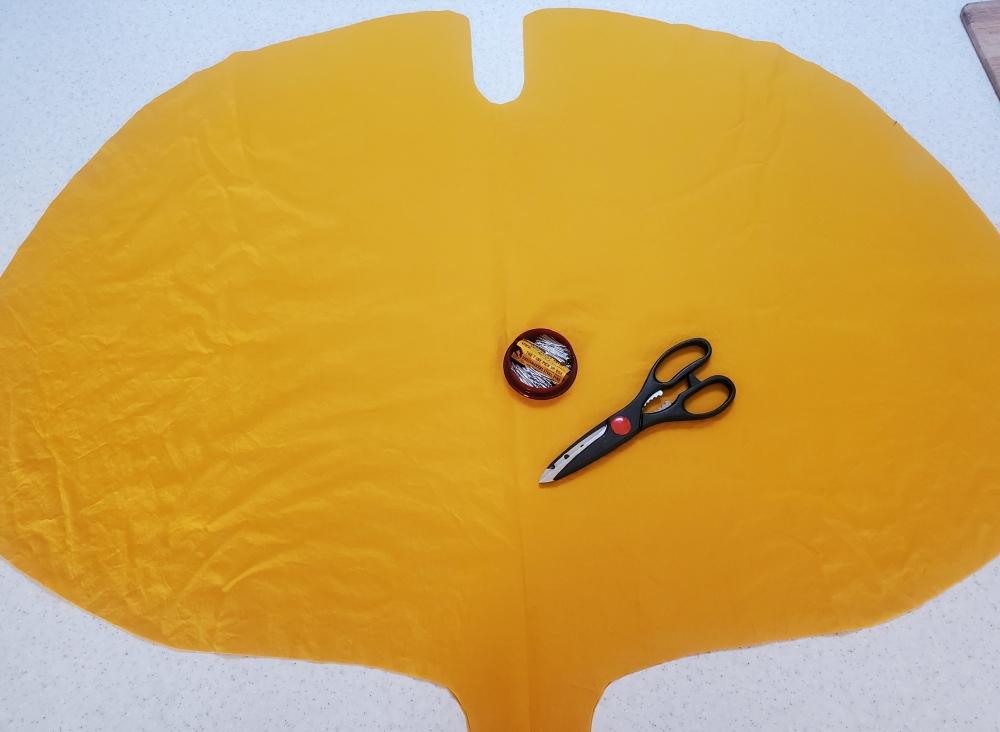
I then sketched in some leaf veins, which would be my quilting pattern. I decided to add 8 veins on each half to make sure that my batting would not clump too much. After washing and drying the fabric, I folded it in half widthwise to make a two-layer rectangle about 115 cm x 105 cm, so I could get my pattern piece onto it. Next, I cut out two identical ginkgo leaves, one for the quilt top, and one for the bottom. I lightly penciled in the leaf vein quilting lines.
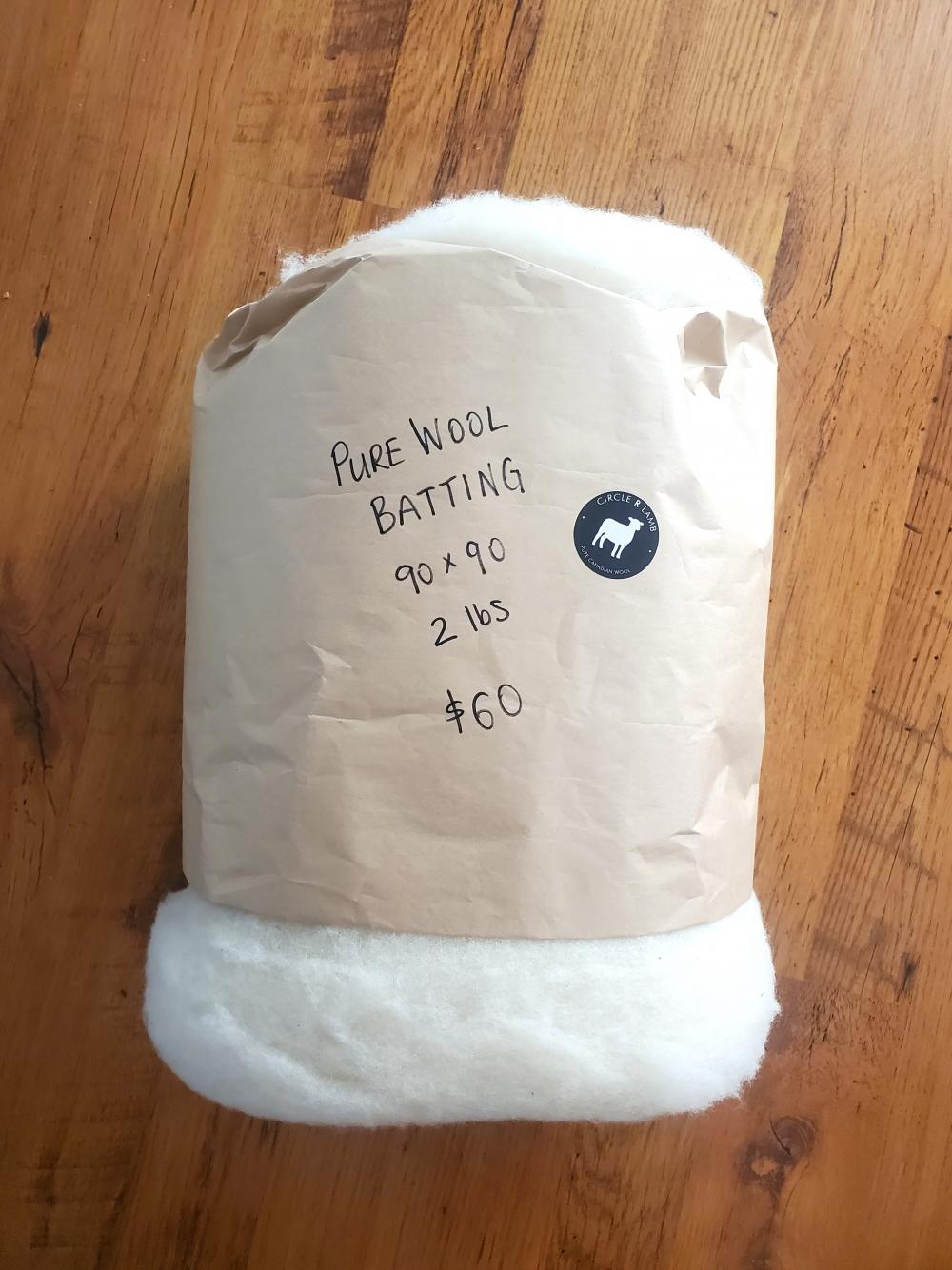
For the batting, I purchased some 100% wool batting from Revolution Wool Co (https://www.revolutionwoolco.com/) here in Ontario. I used two layers of wool batting to make sure the padding would be thick enough for the playmat. I then used my pattern piece to cut out the batting.
I wasn't sure how to sew everything together, but then I decided to sew all three layers of the playmat together at once in a cotton - cotton - wool stack, leaving about a 15 cm gap on one side. As this is for a baby, I made sure to sew the seams twice for extra strength! Once sewn, I clipped and notched all the curves so the playmat would lay as smooth as possible once turned inside out. Then, I turned it inside out using that 15 cm gap!
I hand-sewed the 15 cm gap closed with regular thread. Then, it was time to quilt! I used a whole lot of various yellow embroidery floss from my mom's embroidery stash to first quilt about 1-2 cm from the outside border. Then I quilted along the leaf vein lines that I had penciled on the cotton poplin.
Overall, I love the quilted playmat and can't wait for my baby to use it! The playmat is big enough for tummy time, and the fabric is soft and tightly woven. I also love the wool batting, which will nicely insulate my baby from any cold floors!
Thanks for reading,
Meinhilde @@kikucorner
#@kikucorner #millennialsewing #babysewing #quilting #playmat #ginkgo #minervamakers #minervamakes #minervadotcom #seweveryday #sewersgonnasew #makersgonnamake #sewingproject #sewingprojects #sewingideas #cottonpoplin #yellow #cotton #sewcialist #sewistsofinstagram #quilt #quiltedplaymat #ginkgoplaymat
I am expecting my first baby, so of course I want to make all the baby things! I had seen some quilted leaf playmats around the internet, and I decided I would try to make one myself. Of course the first step would be to decide which type of leaf to make. Some leaves are very intricate, with lots of leaflets or lobes. Since I wanted my playmat to cover as much floor as possible, I decided to use a ginkgo leaf. The shape is relatively simple yet also distinct, and it gives a good, large surface for a baby.
Then I had to decide on which fabric to use! Minerva's Cotton Poplin has a light, crisp feel and is available in many different colours. I got 2 m of the cotton poplin in the Turmeric colourway, a saturated, happy yellow. Toronto had a cold snap after a long, warm summer, and it took a lot of the trees by surprise! Normally ginkgo tree leaves turn from light green to bright yellow in the autumn, but this year the cold snap caused all the green leaves to fall off. Yellow is one of my favourite colours, so I decided to pay tribute to the ginkgo leaves of autumn with the Turmeric colourway.
To design the playmat, I folded a big piece of tracing paper in half and drew a half ginkgo leaf. Then, I cut it out. This makes the pattern symmetrical once the paper opened up. I made sure to try and keep the ginkgo leaf shape clearly obvious while using up as much surface area as possible.
I then sketched in some leaf veins, which would be my quilting pattern. I decided to add 8 veins on each half to make sure that my batting would not clump too much. After washing and drying the fabric, I folded it in half widthwise to make a two-layer rectangle about 115 cm x 105 cm, so I could get my pattern piece onto it. Next, I cut out two identical ginkgo leaves, one for the quilt top, and one for the bottom. I lightly penciled in the leaf vein quilting lines.
For the batting, I purchased some 100% wool batting from Revolution Wool Co (https://www.revolutionwoolco.com/) here in Ontario. I used two layers of wool batting to make sure the padding would be thick enough for the playmat. I then used my pattern piece to cut out the batting.
I wasn't sure how to sew everything together, but then I decided to sew all three layers of the playmat together at once in a cotton - cotton - wool stack, leaving about a 15 cm gap on one side. As this is for a baby, I made sure to sew the seams twice for extra strength! Once sewn, I clipped and notched all the curves so the playmat would lay as smooth as possible once turned inside out. Then, I turned it inside out using that 15 cm gap!
I hand-sewed the 15 cm gap closed with regular thread. Then, it was time to quilt! I used a whole lot of various yellow embroidery floss from my mom's embroidery stash to first quilt about 1-2 cm from the outside border. Then I quilted along the leaf vein lines that I had penciled on the cotton poplin.
Overall, I love the quilted playmat and can't wait for my baby to use it! The playmat is big enough for tummy time, and the fabric is soft and tightly woven. I also love the wool batting, which will nicely insulate my baby from any cold floors!
Thanks for reading,
Meinhilde @@kikucorner
#@kikucorner #millennialsewing #babysewing #quilting #playmat #ginkgo #minervamakers #minervamakes #minervadotcom #seweveryday #sewersgonnasew #makersgonnamake #sewingproject #sewingprojects #sewingideas #cottonpoplin #yellow #cotton #sewcialist #sewistsofinstagram #quilt #quiltedplaymat #ginkgoplaymat